
What is stress?
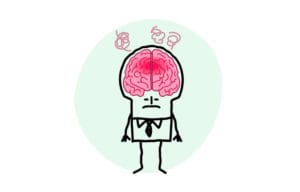
This concept is quite recent in the world of ideas. Hans Selye is one of its promoters. He is the one who made it known around 1930 in the world of research and around 1960 in the general public.
The story of an idea
This concept originally came from engineering sciences. Before Selye’s work, stress was reserved to describe the resistance of materials to a physical force. resistance of materials to a physical force. Selye transferred this notion to living things, i.e. in Selye’s mind, if a bridge or a building gives way under a certain force, above a certain weight, a certain level of stress, it should be the same with living things. Selye’s work has put forward another strong idea, which is good stress and bad stress. The good stress is the one we face and it is also the one that strengthens our ability to fight, while the bad stress is the one that depletes our resources.
For what applications?
For psychologists, the concept of stress is central. It is often the element that will trigger a disorder or illness that was already present in a latent state in a person. For example, a biological predisposition to this or that disease will not be expressed as long as the person is dealing with his or her stressors. But when the person’s capacities and resources are exhausted, this same stress then becomes bad and allows the expression of what was previously dominated, hidden, invisible…
It is not a question of eliminating stress, which is an unrealistic goal, but of teaching people to cope with what is weighing on them as much as possible. A healthy lifestyle and certain protective behaviors will at least partly make this possible. This is called stress management and it is one of the tools used by the therapist who works with stressed people.
How We React to Stress and Difficulties — Willem Kuyken, Oxford Mindfulness, 28 February 2025. A recent discussion of habitual reactions to stress and mindful ways to respond.
Videos in English
How to Make Stress Your Friend — Kelly McGonigal | TED
A talk about how we interpret stress and the role of social connection. Reframing stress does not mean that chronic stress is harmless.
How stress affects your brain — Madhumita Murgia | TED-Ed
A short animated introduction to chronic stress, its effects on the brain and ways to support recovery.
Bibliography
Books in English
Martha Davis, Elizabeth Robbins Eshelman and Matthew McKay. 7th edition, New Harbinger, 2019. English-language edition.
View this book on Amazon
A practical workbook covering relaxation, breathing, coping skills and a personal stress-reduction plan.
Jon Kabat-Zinn. Revised edition, Bantam, 2013. English-language edition.
View this book on Amazon
An in-depth introduction to mindfulness-based stress reduction (MBSR), with meditation and body-awareness practices.
Bob Stahl and Elisha Goldstein. 2nd edition, New Harbinger, 2019. English-language edition.
View this book on Amazon
A structured MBSR workbook with exercises and accompanying guided audio practices.
Michael A. Tompkins. Foreword by Judith S. Beck. New Harbinger, February 2024.
A recent practical guide to CBT skills for stress, anxiety, low mood and negative thinking.
Publisher’s information