
Bipolar disorders can disrupt sleep, energy, relationships and work. Between episodes, many people achieve lasting stability and continue to pursue their goals. I help you understand changes in mood, recognise your early warning signs and protect your wellbeing, alongside medical care.
Recognising the main features
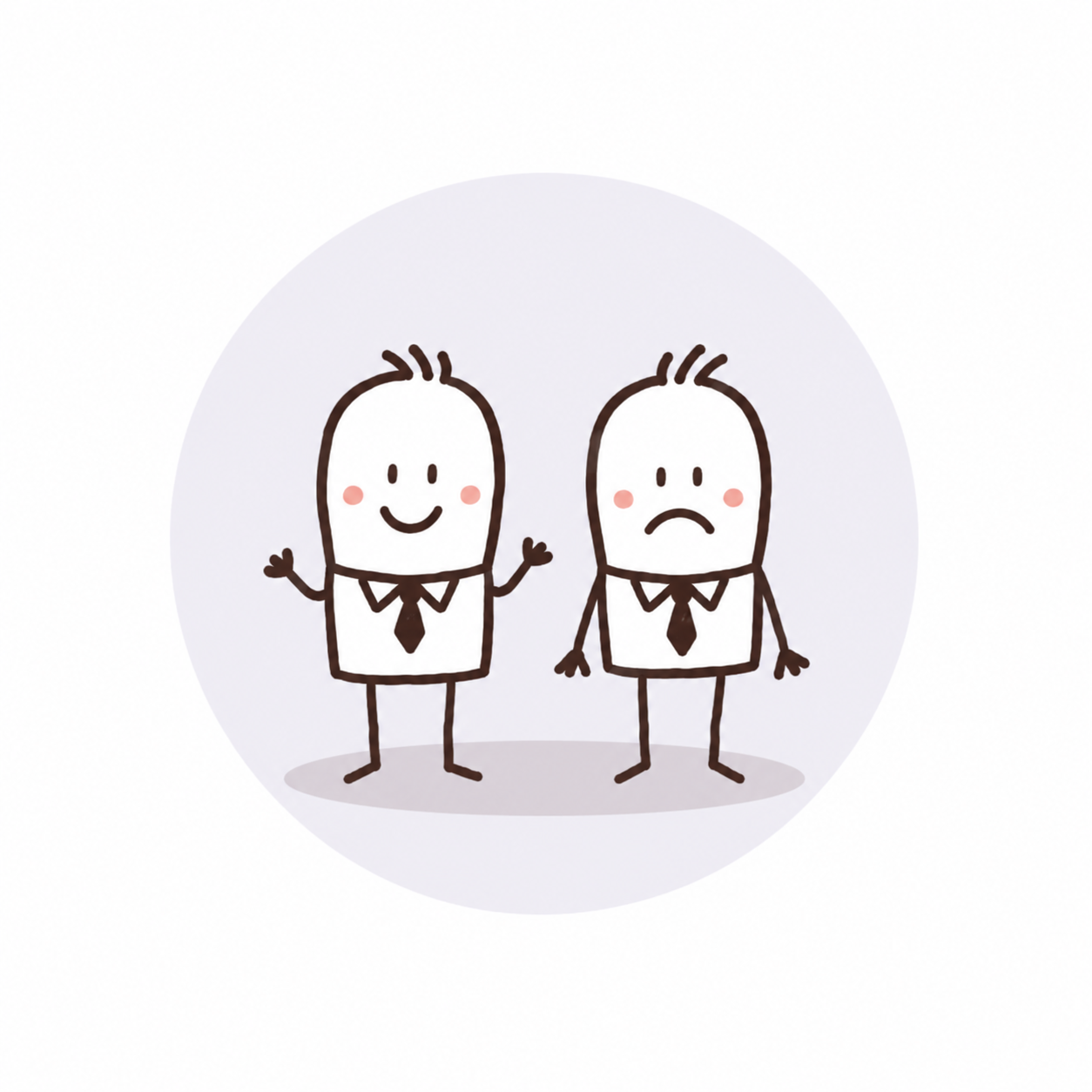
Bipolar disorder involves more than feeling happy and then sad during the same day. Episodes are a marked change from your usual functioning, with changes in energy, activity and sleep lasting several days or longer.
- Depression may involve sadness or loss of interest, exhaustion, slowed thinking, changes in sleep, guilt, difficulty concentrating and sometimes thoughts of death.
- Hypomania involves an unusual increase in activation: needing less sleep without corresponding tiredness, racing thoughts, talking more, increased confidence, taking on many projects or becoming irritable. It can feel like a particularly productive period. For some people, increased sexual desire, disinhibition and impulsivity can lead to acting on urges and taking sexual risks.
- Mania is more intense and can seriously disrupt daily life. It may involve excessive spending, risky behaviour, psychotic symptoms or hospital care. Disinhibition may lead to unprotected sex or situations with sexual, emotional or health consequences that the person would usually have avoided.
- Mixed features involve depressive symptoms alongside activation, such as despair combined with marked agitation. They require particular clinical attention.
Understanding mood fluctuations
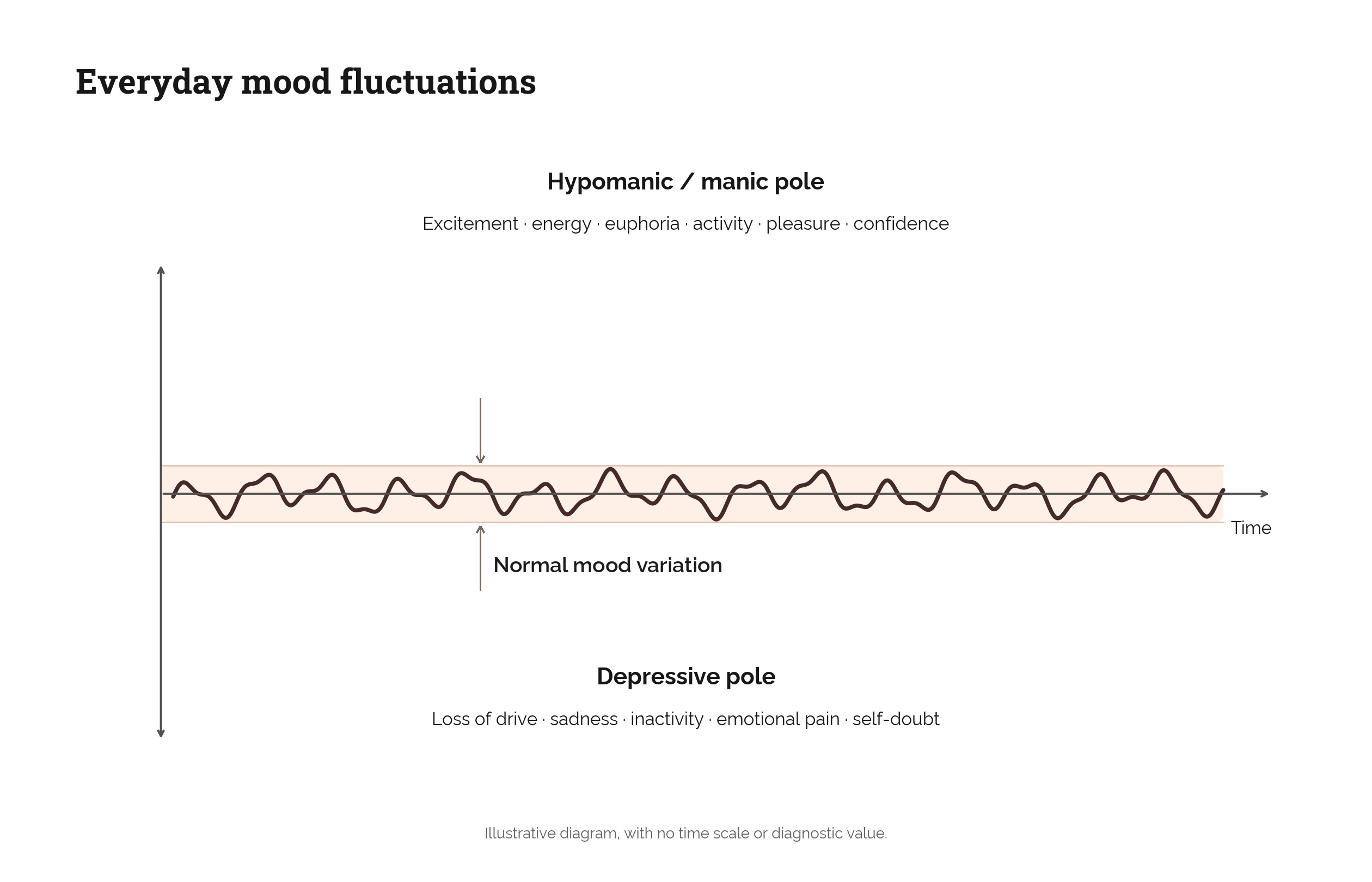
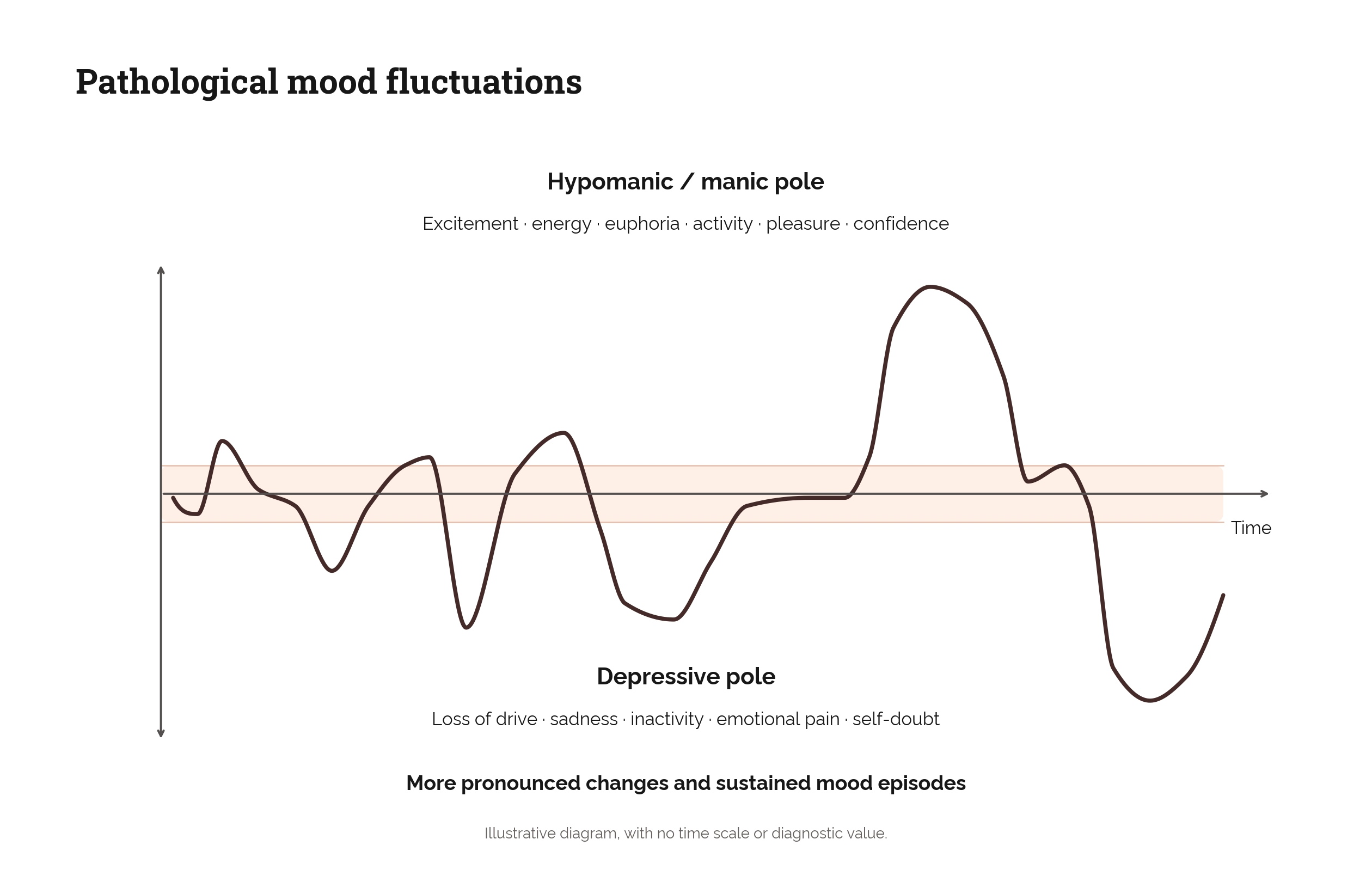
These curves are schematic. They do not show an inevitable course or a regular alternation of episodes and cannot be used to make a diagnosis.
Bipolar I, bipolar II and cyclothymia
| Type | Key features |
|---|---|
| Bipolar I | At least one manic episode. Depressive episodes are common but are not required for this diagnosis. |
| Bipolar II | At least one hypomanic episode and one major depressive episode, with no history of a manic episode. |
| Cyclothymia | Persistent fluctuations involving hypomanic and depressive symptoms below the threshold for full episodes, over at least two years in adults. |
Why bipolar II can go unrecognised
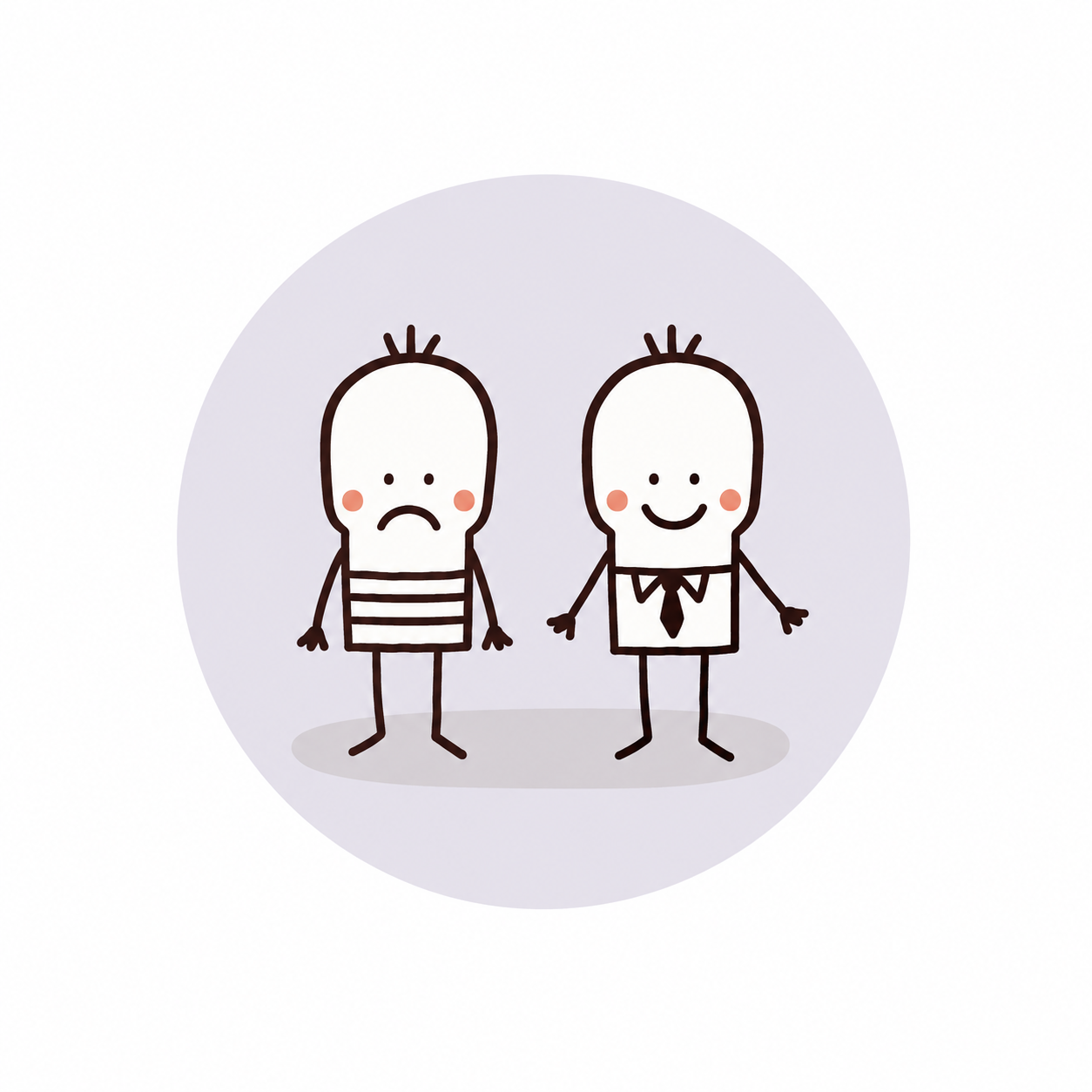
Bipolar II may be mistaken for recurrent depression when past hypomania is missed. People often consult their doctor or psychologist during depressive phases, but are much less likely to seek help during periods of elevated mood. These highs can feel enjoyable, productive or simply part of their personality. Some people who initially appear to have depression alone therefore have bipolar II disorder, identified when earlier hypomanic episodes are recognised.
Others experience persistent fluctuations involving milder depressive and hypomanic symptoms, which may indicate cyclothymia. This has diagnostic criteria distinct from bipolar II. Looking back at sleep, energy, projects and observations from people close to you helps clarify the diagnosis.
Bipolar II is not necessarily a mild illness: depressive episodes and their impact can be substantial. It is common and under-recognised, but estimates do not consistently show it to be more common than bipolar I. Diagnosis requires a psychiatric assessment and an understanding of the course of symptoms over time.
Positive events can also be stressful
A promotion, the birth of a child, moving home or getting married may be welcome and still require considerable adjustment. New responsibilities, excitement, changed routines and shorter nights can place demands on your available resources. You may feel enthusiastic without recognising this load as stress.
For someone who is vulnerable, these changes can contribute to mood instability. They do not inevitably cause relapse, and avoiding valued life goals is not the aim. We work on preparing for transitions, adjusting demands and protecting recovery time. An episode can also occur without an obvious stressful event.
Would you like to assess your own stress level? You can review the impact of life events with the Holmes and Rahe scale, then assess your recent psychological stress with the PSM-25 (MSP-25). These offer complementary perspectives and can help prepare a discussion in therapy. Neither score can predict a relapse on its own.
Alcohol and other drugs: protecting against biological stress
People living with bipolar disorder, or with a predisposition to it, also need to protect themselves from non-medical psychoactive substance use, especially alcohol. Alcohol, cannabis, stimulants and other recreational drugs can disrupt sleep, destabilise mood, interact with medication and contribute to relapse.
These substances can be understood as biological stressors: they place demands on and disrupt the body’s functioning, even when the person does not feel psychologically stressed. Avoiding alcohol and recreational drugs is therefore an integral part of protecting stability and preventing recurrences. We can work together on situations that lead to substance use, their triggers and ways to protect against them, alongside your doctor or an addiction treatment team when needed.
If you are dependent on alcohol, plan withdrawal with a doctor: stopping suddenly without medical support can be dangerous.
How psychotherapy can help
Therapy combines understanding the illness, managing stress and planning to reduce relapse risk. Together, we develop practical, personal strategies that fit your life.
Psychoeducation is central to this work. It helps you gradually become an expert in your own condition: understanding the illness, recognising your personal patterns and identifying what supports or disrupts your stability. Learning to notice your early warning signs and adjust your responses gives you practical ways to help prevent relapse and take an active role in your care.
- Track mood, sleep, energy and changes in activity.
- Recognise early signs, such as sleeping less without tiredness, taking on more projects, increasing irritability or withdrawing.
- Prepare for major life events and protect regular daily rhythms.
- Work on rumination, relationship tensions and difficulty setting limits.
- Agree an action plan with your psychiatrist and, with your consent, someone close to you: whom to contact and when.
Psychoeducation and psychological interventions adapted for bipolar disorder can help reduce recurrences and improve functioning, particularly alongside medication. They cannot guarantee that an episode will never return. During an acute episode, medical stabilisation is the priority.
Medication and psychotherapy work together
In many situations, medication is necessary to reduce the intensity of episodes and help prevent their return. It acts on biological mechanisms involved in mood regulation. This is not simply a matter of correcting a measurable chemical shortage or removing ordinary emotions. A psychiatrist selects treatment according to your history, current episodes, potential benefits and side effects, with appropriate monitoring.
Long-term medication can raise understandable concerns: fears about personality changes, missing some aspects of increased activation, side effects or difficulty accepting treatment when you feel well. We can discuss these concerns openly and prepare questions for your prescriber. As a psychologist, I help you understand and participate in care decisions, while medication prescribing and adjustments remain with your medical clinician. Never stop your medication abruptly without medical advice, as this can trigger a relapse.
Recognising and accepting bipolar disorder, and learning to protect yourself against recurrence, can also involve grieving a particular idea of “normality”: living without having to think about your vulnerability, your daily rhythm or necessary precautions. This process may bring sadness, anger or a sense of unfairness. Psychotherapy can help you work through these emotions, integrate the diagnosis into your life story and build a life that remains rich in goals, relationships and personal choices.
When should you seek urgent help?
A major reduction in sleep with increasing activation, loss of contact with reality, serious risk-taking or worsening depression requires prompt medical advice. If there is an immediate risk of suicide or other harm, or you cannot stay safe, contact local emergency services immediately. Do not wait for a psychotherapy session.
Emergency numbers by country
If there is immediate danger, you cannot stay safe or urgent medical help is needed, call the emergency service in the country where you are physically located. Explain that this is a mental health crisis and give your location.
| Country | Immediate emergency | Service and official information |
|---|---|---|
| Singapore | 995 | Emergency ambulance · SCDF |
| France | 15 or 112 | SAMU / European emergency number · Service Public |
| United States | 911 | Emergency services · 911.gov |
| United Kingdom | 999 | Emergency services / A&E · NHS |
| Australia | 000 | Triple Zero · Healthdirect |
| Canada | 911 | Emergency services · Government of Canada |
| New Zealand | 111 | Emergency services · Health NZ crisis teams |
In Singapore, contact national mindline 1771 for mental health support and guidance, or use its online service. IMH Emergency Services provide urgent psychiatric assessment 24 hours a day. You can also go to the nearest hospital emergency department. IMH information.
In England, if you need urgent mental health support without immediate danger, call NHS 111 and select the mental health option. Elsewhere, contact your local mental health crisis team or nearest emergency department.
Support lines do not replace emergency services when there is immediate danger. Call these short numbers from within the relevant country. Information checked on 2 November 2026.
Hypomania self-assessment: the HCL-32
The HCL-32, developed by Jules Angst and colleagues, explores periods of increased activation during your life. It can help identify possible hypomanic symptoms, including when depression obscures possible bipolar II disorder. No questionnaire performs best in every population. It cannot replace a psychiatric assessment.
Open the HCL-32 questionnaire in English
Recall a period when you felt “high”. Answer every item with your past “high” periods in mind, independently of how you feel now. Consider changes from your usual functioning. Do not count an unanswered item as “no”.
Adults · 32 items · Yes = 1 point, no = 0 points. Answer all 32 items before calculating the total.
Your answers are processed only within this page. This questionnaire does not transmit or save them. Reloading clears them.
For adults, preferably with a professional, and for student training. Do not self-diagnose or change medication on the basis of a score. Interactive English translation of the supplied French version (Angst, 2005; Hantouche, 2007); this translation has not been independently validated. HCL-32 validation study.
Support to protect your wellbeing
I offer therapy in English and French, at my practice in Singapore or by video when appropriate. We work alongside your psychiatric care. A 45–60-minute session costs SGD 250.
Contact Franck DibouësFurther reading in English
Books to discuss in therapy, for people living with bipolar disorder and those supporting them.
 Get the bookBook preview
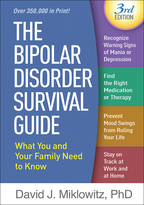
The Bipolar Disorder Survival Guide · Third Edition
David J. Miklowitz. Guilford Press, 2019.A practical guide to recognising episodes, working with treatment and planning to reduce recurrences.
 Get the bookBook preview
The Bipolar II Disorder Workbook
Stephanie McMurrich Roberts, Louisa Grandin Sylvia and Noreen A. Reilly-Harrington. New Harbinger, 2014.Exercises focused on recurring depression, hypomania and anxiety in bipolar II disorder.
Videos in English
Bipolar Disorder in Adults · Mental Health Minute
Watch on YouTubeNational Institute of Mental Health. A short introduction to bipolar disorder. Use CC to enable available English captions. Watch on YouTube.
Bipolar Disorder in Adults · Expert discussion
Watch on YouTubeNational Institute of Mental Health. An extended discussion of symptoms, risk factors, treatment and research. Use CC to enable available English captions. Watch on YouTube.