
Do you keep having the same arguments, feel increasingly distant, or struggle after a breach of trust? A relationship crisis can make it seem impossible to talk without hurting each other. I help you understand what is happening between you, find a way to communicate and consider what you want for your relationship.
What is Gottman Method couples therapy?
Developed by psychologists John and Julie Gottman, the Gottman Method draws on their research into couple relationships. It combines a relationship assessment with practical work on friendship and closeness, conflict management and shared meaning. The aim is to help partners handle disagreements more constructively, rather than expect every difference to disappear.
Working through a relationship crisis
Repeated arguments, silence, jealousy, infidelity, sexual difficulties, the pressures of parenting or changes connected with living abroad can bring a couple to therapy. Each partner often arrives with their own pain and explanation of the problem. My role is to help both of you feel heard and understand the pattern in which you have become stuck.
We start with specific everyday situations. What happens just before a conversation escalates? What are you trying to communicate? What does your partner hear? Looking closely at these moments helps turn a broad accusation into a clearer request.
How I will help you
I am a clinical psychologist and have completed Level 1 and Level 2 training in Gottman Method Couples Therapy. I adapt the work to your history, your pace and the goals we agree together.
- Understand your relationship. We explore your history, current difficulties, expectations and existing strengths. Depending on your circumstances, individual interviews and questionnaires may complement our conversations together.
- Reduce escalation. We identify criticism, contempt, defensiveness and withdrawal. We practise alternatives: expressing a need without attacking, taking responsibility for your part, showing respect and taking a calming break before returning to the conversation.
- Address painful issues. We make room for hurt, unmet needs and ongoing differences, and look for compromises that take both partners seriously.
- Create opportunities to reconnect. Small exercises between sessions can help you listen, notice each other’s efforts and make space for enjoyable time together.
Rebuild connection and choose your next steps
Therapy does not require you to stay together at any cost. It can support rebuilding your relationship or help clarify a decision when your wishes differ. We review what is changing and what remains difficult. No particular outcome can be guaranteed.
Where there is violence, coercive control or fear, each person’s safety comes first. Individual assessment and specific support may be needed before joint sessions can be considered.
Starting couples therapy
I see couples at 150 Cecil Street, #07-02, Singapore 069543, or by video call. An initial conversation allows us to clarify what you are looking for and agree on the arrangements for sessions.
Contact Franck DibouësCheck in on your relationship satisfaction
This four-question Couples Satisfaction Index (CSI-4, Funk and Rogge) offers a first look at how you feel about your relationship. Each partner can answer separately and discuss their experience in therapy. It complements therapy and is not the official Gottman assessment.
The CSI-4 is a brief self-report measure of relationship satisfaction. It does not diagnose a disorder or decide whether a couple should stay together.
Open the relationship satisfaction questionnaire
Answers are processed only in your browser. This form does not send or store them. Reloading the page clears them.
Funk, J. L., & Rogge, R. D. (2007). Testing the ruler with item response theory: Increasing precision of measurement for relationship satisfaction with the Couples Satisfaction Index. Journal of Family Psychology, 21(4), 572–583. Source and terms of use: Ronald Rogge’s laboratory. The authors permit clinical and research use.
Books and further reading
These books offer complementary perspectives. The books by Esther Perel, Janis Abrahms Spring and Alain de Botton are not manuals of the Gottman Method.
Get the bookBook preview
Fight Right: How Successful Couples Turn Conflict Into Connection
Julie Schwartz Gottman and John Gottman, 2024. Practical reflections on the way partners approach conflict and repair their connection. Get the bookBook previewMating in Captivity
Esther Perel, 2006. On intimacy, independence and sustaining desire in a long-term relationship. Get the bookBook previewThe State of Affairs: Rethinking Infidelity
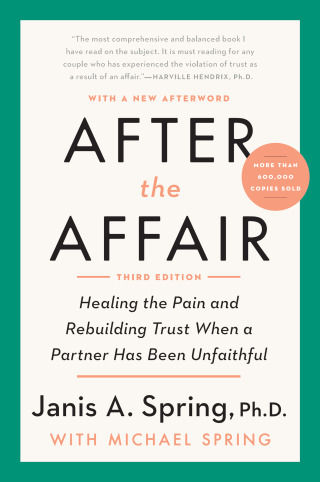
Esther Perel, 2017. A perspective on betrayal, its impact and the questions it raises for couples.- After the Affair: Healing the Pain and Rebuilding Trust When a Partner Has Been Unfaithful
Janis Abrahms Spring, with Michael Spring. Third edition, Harper, 2020.A guide to understanding the impact of infidelity, making room for each partner’s reactions and deciding whether to continue the relationship. The authors suggest practical ways to discuss what happened, rebuild trust gradually and reconnect intimately. A complementary resource for couples therapy, without assuming that reconciliation is the right choice for everyone.
 Get the bookBook previewThe Course of Love
Alain de Botton, 2016. A philosophical novel about the ordinary challenges of building a life together, beyond falling in love.
Videos to explore
John and Julie Gottman: Even healthy couples fight the difference is how
TED2024. English audio, with English subtitles available in the player. Watch on TED and read the transcript.
Esther Perel: The secret to desire in a long-term relationship
Watch on YouTubeTEDSalon NY2013. English audio, with English subtitles. A complementary perspective on intimacy and desire. Watch on TED and read the English transcript.