

I have borrowed this title from a book by Michel Desmurget, a neuroscience researcher at Inserm. An English-language talk on screens and childhood is included below. Desmurget’s original French lecture is linked in the bibliography. His argument is that early, regular exposure may interfere with opportunities to develop language and other cognitive abilities. He illustrates this discussion with a study published in 2006 examining children’s human figure drawings in relation to their television exposure. The studies discussed in his presentation raise questions about attention, distraction and learning. Learning requires concentration, and a television playing in the background can compete for a child’s attention. The slides reproduced below present the author’s argument; the associations shown should not automatically be interpreted as proof that television alone caused every difference observed.
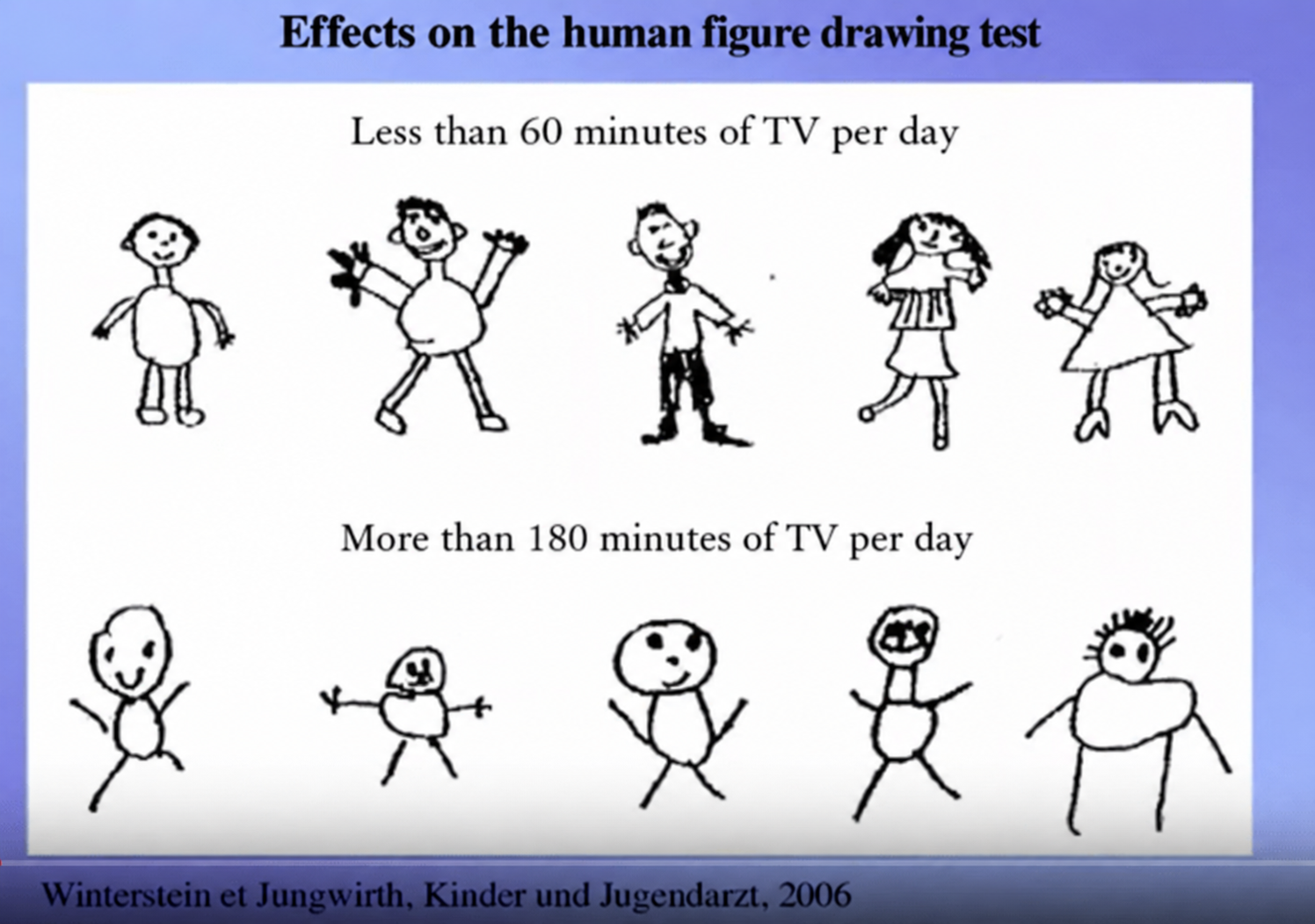
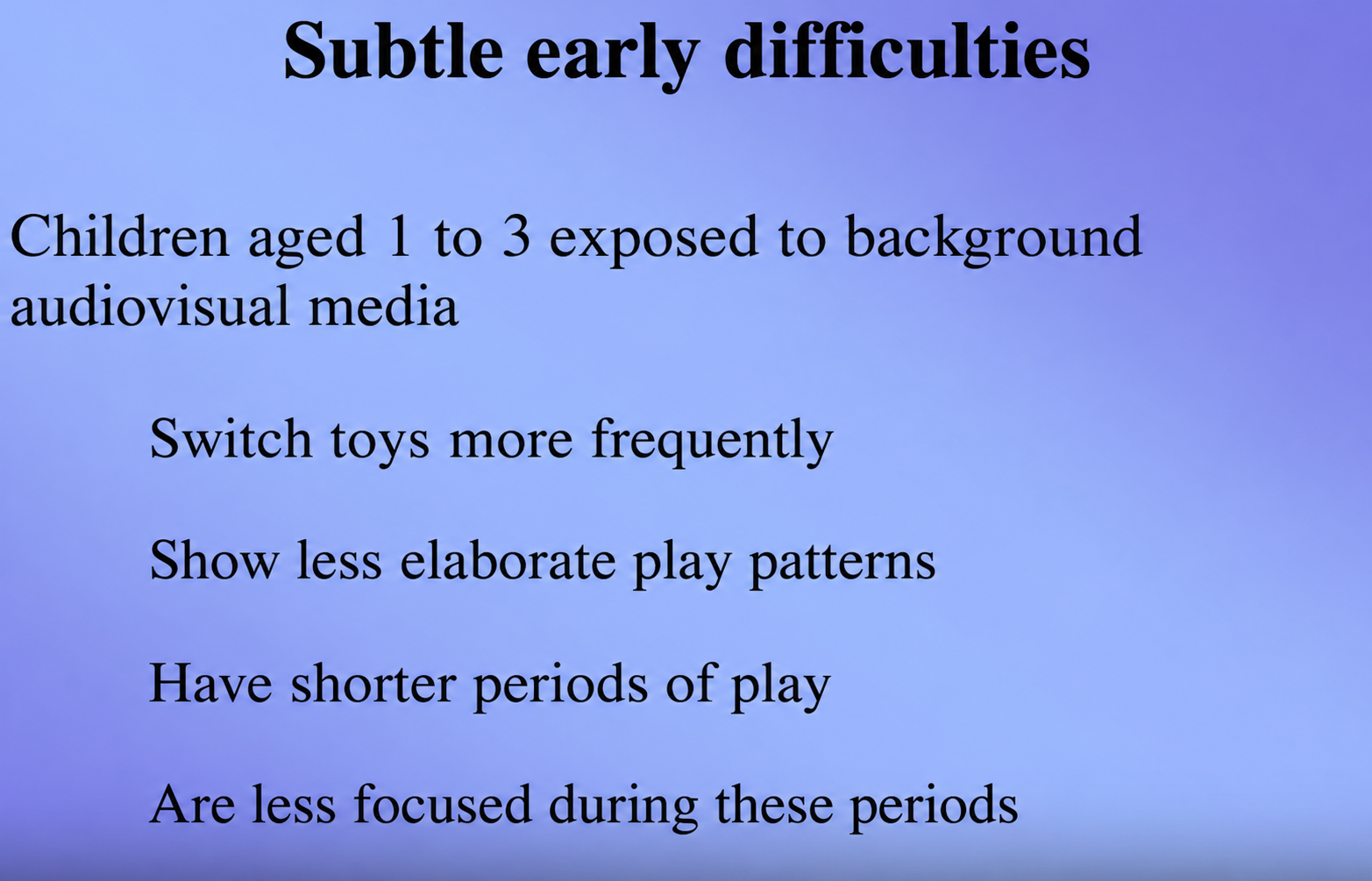
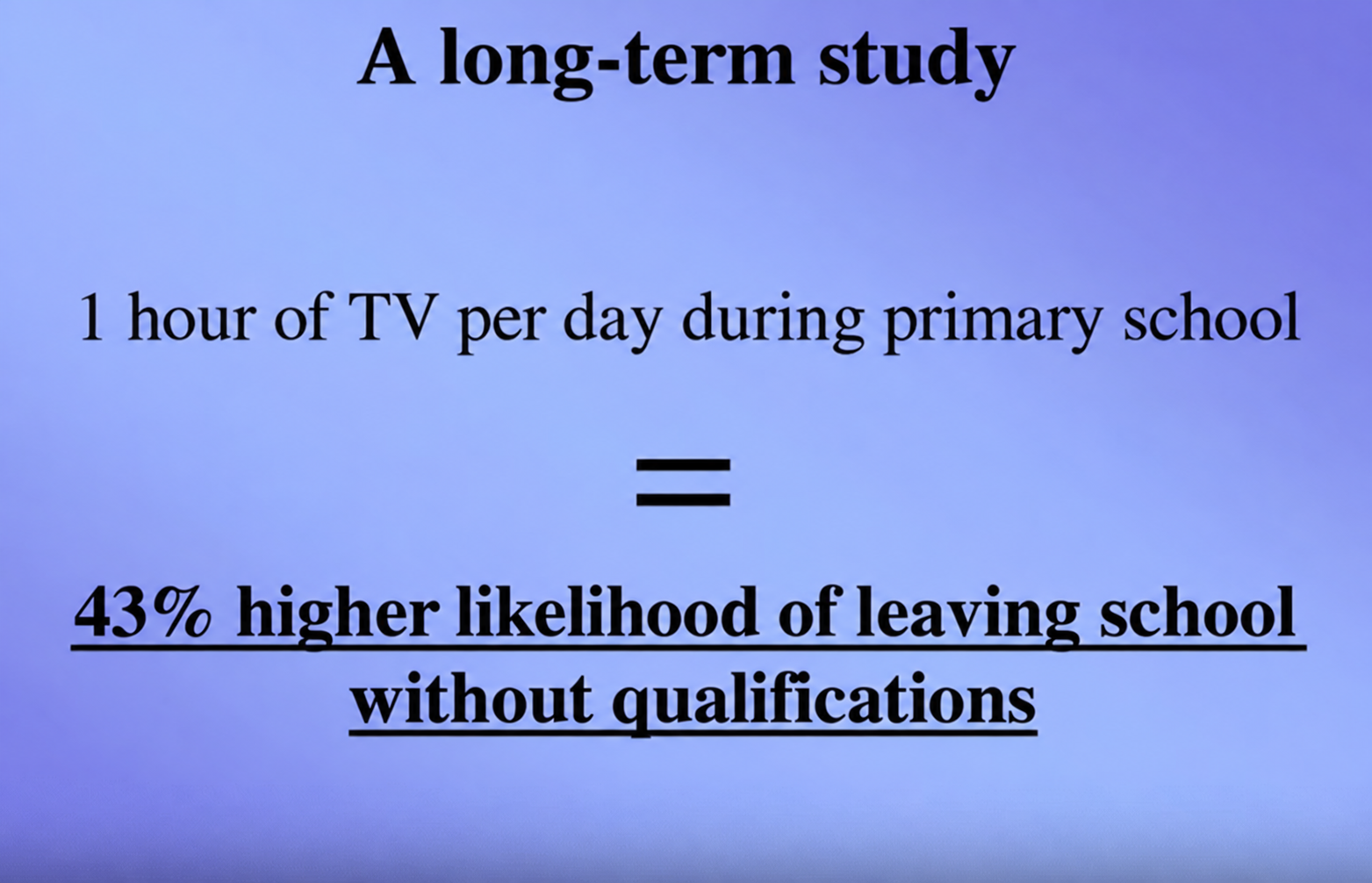
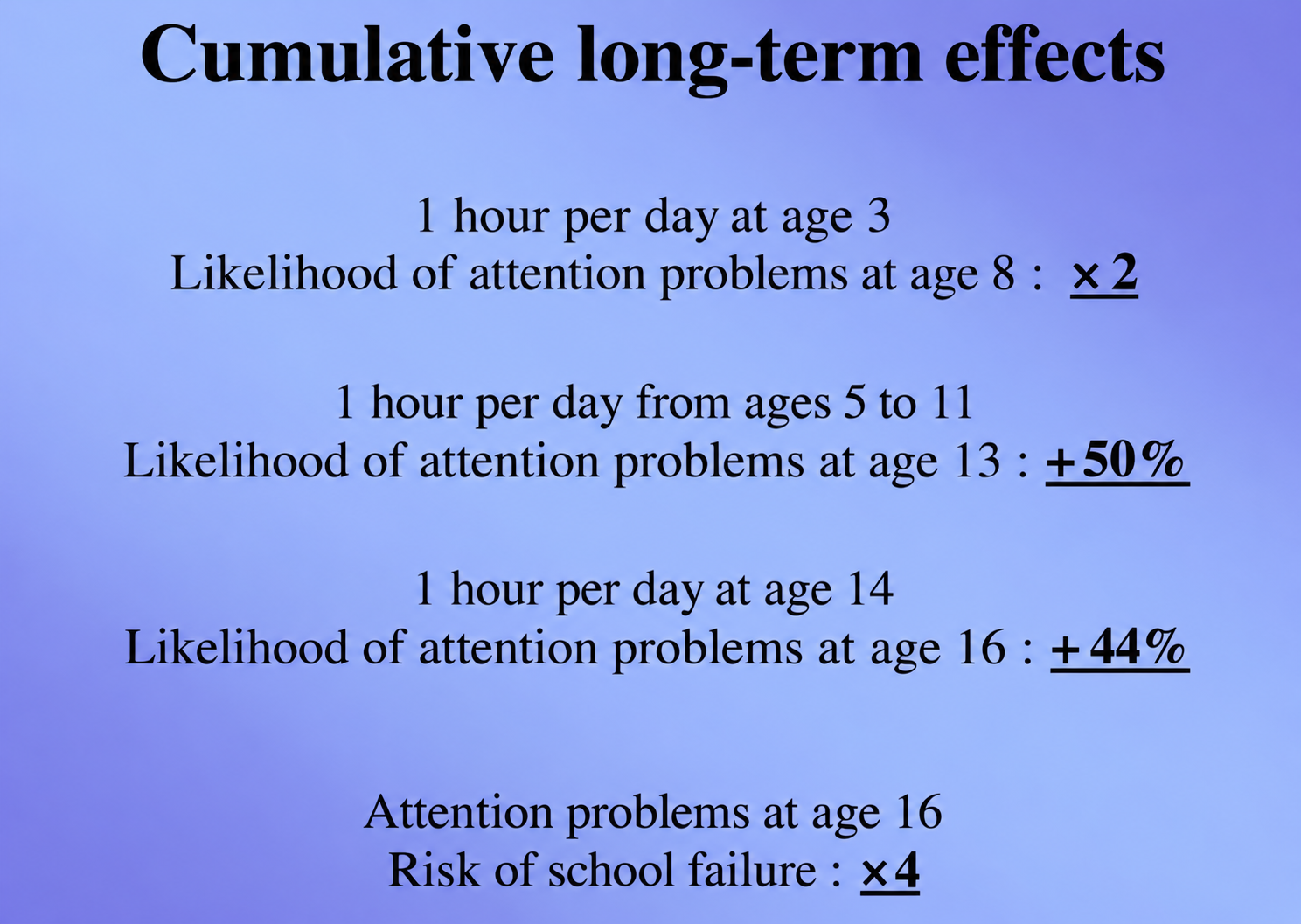
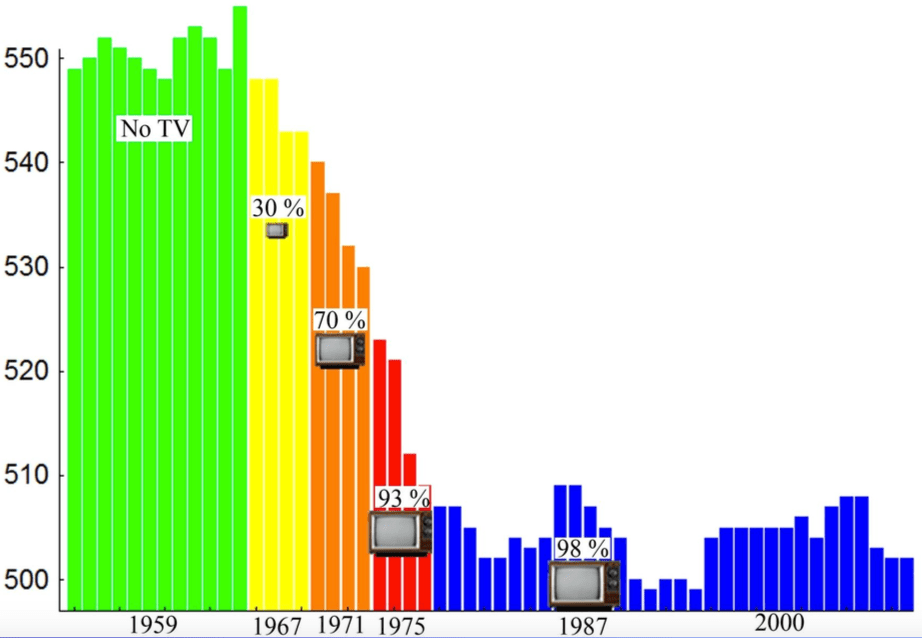
Two passages discussed in TV lobotomie
Desmurget’s book argues for limiting young children’s exposure to television, including background television, and questions claims made for “educational” DVDs and vocabulary development. He also discusses school performance: Desmurget challenges the idea that children can learn efficiently while simultaneously watching videos, using the internet and doing homework. He presents comparisons involving school attainment and television in children’s bedrooms to argue that screen habits deserve attention. These points summarise the passages discussed in the French article rather than reproducing the book’s quotations.A concluding reflection from Patrick Le Lay
Patrick Le Lay, then chairman and CEO of TF1, France’s largest television channel by audience at the time, put it this way:
“What we sell to Coca-Cola is available human brain time.”
« Ce que nous vendons à Coca-Cola, c’est du temps de cerveau humain disponible. »
Patrick Le Lay, Les dirigeants face au changement, Éditions du Huitième jour, 2004. English translation of the original French quotation. Context of the quotation (in French).
Jonathan Haidt, TED2026. In English, with English subtitles selected by default. This talk complements the earlier research discussed above with a broader look at smartphones, schooling and social connection. Use the CC button to show or hide subtitles.
Bibliography
Michel Desmurget’s original lecture (in French), from which the translated slides above are drawn.
A detailed presentation of Michel Desmurget’s work on the proposed effects of screens is available here (in French). Michel Desmurget also discusses children’s screen use in La fabrique du crétin digital. The linked edition is in French.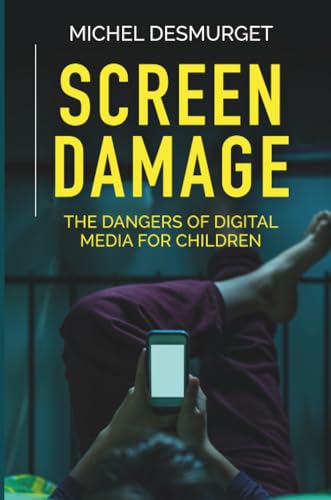 Get the bookBook preview
Michel Desmurget. Translated by Andrew Brown. Polity, 2022. English translation of La Fabrique du crétin digital.
View this book on Amazon
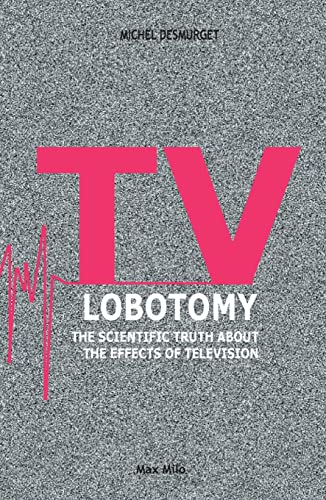 Get the bookBook preview
Michel Desmurget. Max Milo, 2023. English-language edition.
View this book on Amazon