

The word “emotion” comes from the Latin emovere, meaning to set in motion. Emotions can be understood as a product of evolution. They serve an adaptive function: they help us respond to and function within a particular environment. Emotions are like an alarm system, telling us about what an environment may hold. Sometimes this system becomes disrupted or remains stuck in an alarm state, as can happen in post-traumatic stress or phobias. For example, disgust at spoiled food helps us avoid eating it. Emotions have universal features, but culture influences how they are experienced and expressed. People may all feel anger, yet the situations that trigger it and the ways they show it can differ considerably. A trader on Wall Street and a hunter in a community in New Guinea may encounter very different situations. Cultural expectations also influence whether anger is expressed openly or restrained, with considerable variation between individuals as well as societies.
What are the different emotions?
In the classification developed by psychologist Paul Ekman in 1972, the six basic emotions are joy, anger, fear, sadness, disgust and surprise. The status of contempt has also been discussed, with some classifications treating it as a seventh basic emotion. These emotions are associated with characteristic facial expressions.
Living well with emotions
Emotions are not always easy to accept or express. Few people enjoy crying in public, for example. Yet sadness can signal to others that someone is struggling. When empathetic people are nearby, this may make it easier to receive comfort and support. In this example, allowing sadness to be expressed rather than hiding it, including through tears, can ease bodily tension and help reconnect someone with others at a moment of vulnerability.Understanding and managing emotions: video in English
How to manage your emotions (TED-Ed). An animated introduction to recognising emotional responses and choosing ways to regulate them; developed with expert consultants Kateri McRae and James Gross.
Recommended reading
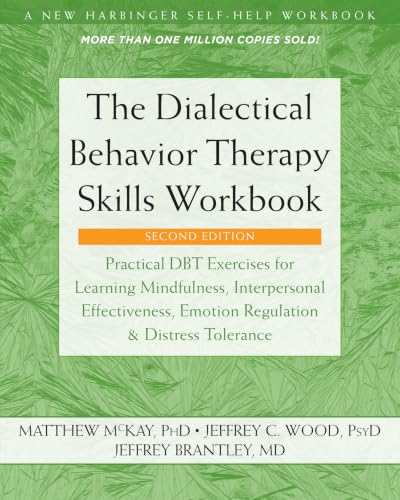 Get the bookBook preview
Matthew McKay, Jeffrey C. Wood and Jeffrey Brantley. Second edition, New Harbinger, 2019.
An established practical workbook on mindfulness, emotion regulation, distress tolerance and interpersonal effectiveness.
Publisher’s information
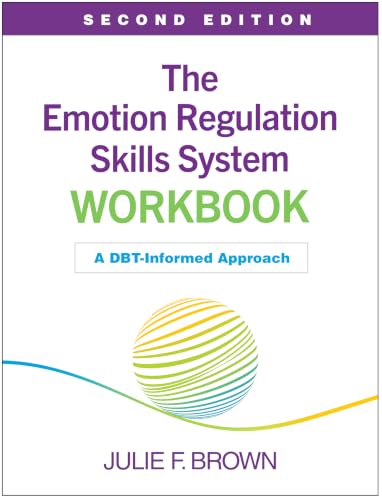 Get the bookBook preview
Julie F. Brown. Second edition, Guilford Press, paperback published December 2025.
A recent structured workbook for Skills System participants, with examples and worksheets for learners of different ages and abilities. It is designed to support a skills programme with appropriate guidance.
Publisher’s information