
Introduction
A near-death experience (NDE, or EMI in French) is a rich, complex and highly structured experience of consciousness, often reported in situations of clinical death, including after resuscitation from cardiac arrest.
Two forms can be distinguished:
– The first involves an out-of-body experience, in which the person experiences awareness outside their physical body, without a mystical episode.
– The second, sometimes called a “complete” or “transcendent” NDE, has a pervasive spiritual dimension. Many NDEs combine both forms, with the out-of-body experience followed by a mystical episode.
There are also subtypes, including distressing NDEs, which may be described as hellish, void or inverted experiences, and shared-death experiences, in which several people describe participating simultaneously.
A person who has a near-death experience is often called an “experiencer”.
This article explores what a near-death experience is.
After defining the phenomenon, we will look more closely at the different stages experiencers may describe.
A clinical psychologist for twenty years, I have studied NDEs and related phenomena for many years.
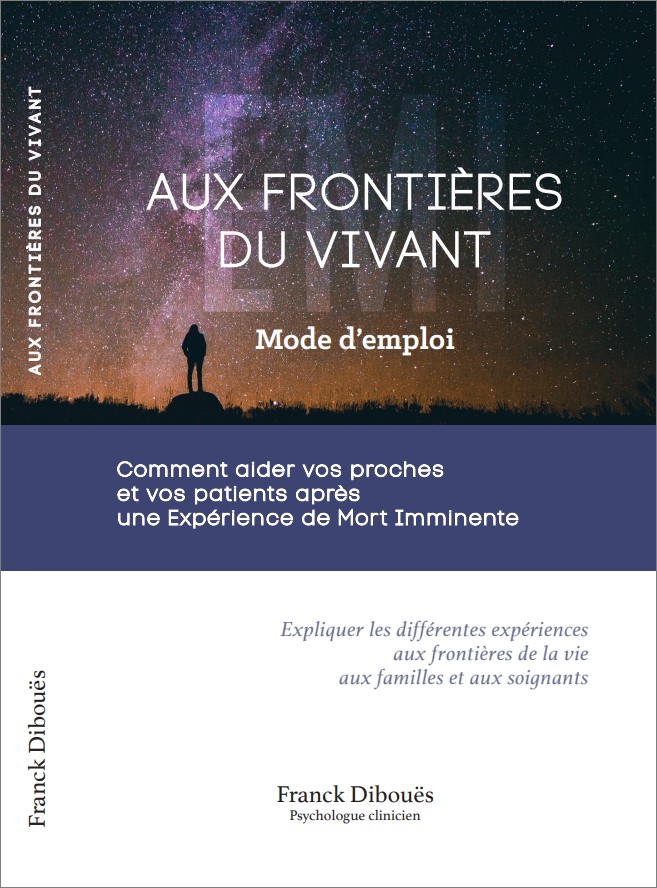
My interest in this subject also led me to publish Aux frontières du vivant, mode d’emploi, a French-language book devoted to understanding near-death experiences and supporting those who have them.
Defining a near-death experience
NDEs are subjective psychological experiences with spiritual or mystical dimensions, reported across cultures and throughout history. They may involve different stages, varying from one culture, person and experience to another.
They are reported in many circumstances, from ordinary states of consciousness, sometimes described as “NDE-like” experiences, to the extreme circumstances of clinical death.
NDE-like experiences may arise during intense fear, meditation, trance or orgasm. Accounts following cardiac arrest raise particularly challenging questions, because the interruption of circulation rapidly compromises brain function.
In my view, the study of NDEs challenges the materialist hypothesis that consciousness is produced solely by the brain, particularly when experiences are reported after cardiac arrest.
I see NDEs as a blind spot in contemporary Western materialism: they point towards normally invisible dimensions of existence that our culture collectively denies or represses.
These experiences reveal, in my view, an aspect of reality that our civilisation refuses to acknowledge for ideological, historical and political reasons.
The stages of near-death experiences
Not every NDE includes all the stages below, but each may involve some of them. Raymond Moody described around eleven recurring sequences.
The stages Moody described in classic NDE accounts include the following:
The difficulty of communicating the experience
Experiencers describe entering a space different from our earthly environment, with perceptions unlike those of ordinary life.
Time may seem absent or overlapping, with past, present and future occurring simultaneously. Visual perception is often described as encompassing many different viewpoints.
There may be no up or down, with scenes perceived from several perspectives at once. An object may appear visible from both front and back. Vision is often described as extending through 360 degrees.
Taste and smell are generally absent from these accounts, although foul smells are sometimes described in distressing NDEs.
Spoken language, suited to describing a three-dimensional earthly environment and time, may feel inadequate for conveying the mystical nature of an NDE.
This can be frustrating for experiencers trying to share what happened with people unfamiliar with the subject.
It is one reason experiencers often value speaking with one another: despite the difficulty of putting an NDE into words, they may understand one another more readily.
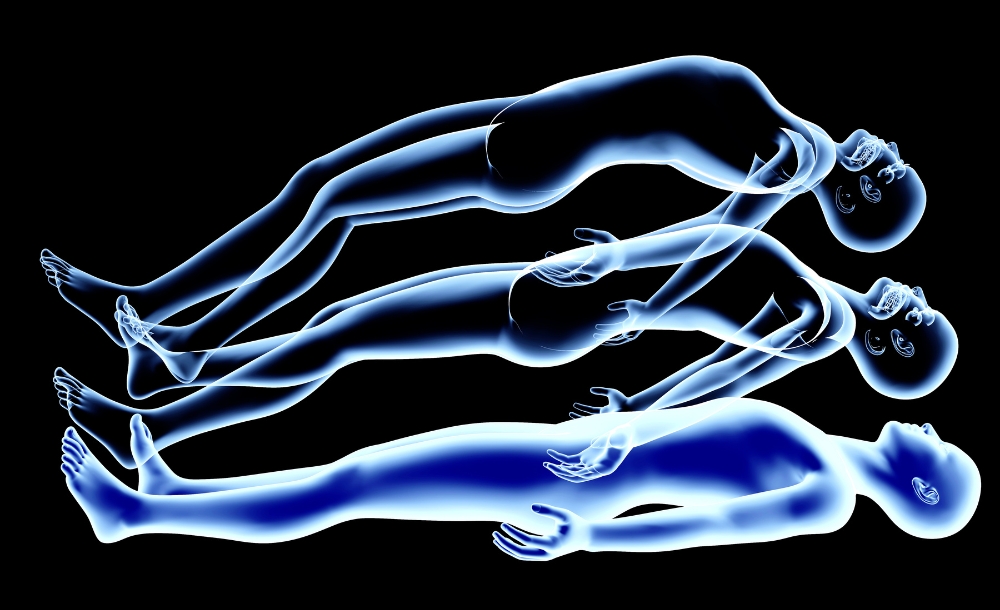
The out-of-body experience
People describe seeing their physical body from a distance. For example, some who report an NDE during surgery say they watched the operation from near the ceiling.
Many do not initially understand what is happening or recognise that the body they can see is their own.
Some describe observing someone lying in their bed without realising that this person was themselves, or at least their physical body…
During the out-of-body experience, consciousness seems, in these accounts, no longer bound by ordinary physical constraints. People describe passing through walls or bodies with ease while being unable to interact with the living.
Many try to make contact, but describe passing through organic or inorganic matter without being able to interact with it.
Experiencers may also describe travelling in consciousness: thinking of someone, wherever that person is, seems to bring them almost instantly to their side.
For example, mothers sometimes describe thinking of their children and immediately finding themselves beside them, even on the other side of the world.
When accounts from those involved match, I consider this corroboration to challenge the hallucination hypothesis: the experiencer describes events occurring at a distance from their apparently unconscious physical body.
The awareness of death
The experiencer becomes aware of being dead, or at least of their physical body having died.
Sometimes they describe hearing someone declare their death, in an operating theatre or during resuscitation. More often, they simply have a clear sense that their earthly life has ended.
An indescribable feeling of calm and peace
Experiencers often report a profound sense of well-being.
Paradoxically, the NDE may unfold against a dramatic scene to which they feel detached: they realise they must be dead, or wonder why everyone is so busy around the body.
They may no longer feel the primary emotions of fear, sadness and disgust, although fear and disgust often feature in distressing NDEs.
Experiencers commonly describe feeling detached from the physical body they have just left. They feel peace, calm and a joy unlike anything in their earthly life.
In a word, the experience may evoke the nirvana described in Eastern traditions.
Sounds and noise
Cracking, roaring, ringing or other unpleasant sounds are sometimes reported at the beginning of an NDE. Most experiencers do not describe these noises.
Some describe magnificent, indescribable heavenly music, sometimes understood as the music of angels.
The tunnel
A tunnel often appears in transcendent NDE accounts. It seems to mark the transition from an out-of-body experience to a complete NDE with a spiritual and mystical dimension.
The tunnel seems to draw the experiencer in, carrying them at tremendous speed. Benevolent supernatural beings may begin to appear during this passage.
Encounters with spiritual beings or people who have died
From the tunnel onwards, some experiencers describe meeting beings or people who have come to welcome them. These encounters are described as benevolent, except in distressing NDEs.
The deceased people encountered are usually loved ones, such as parents or acquaintances, though some were known only briefly.
People also describe meeting deceased pets. Sometimes they encounter people they feel they know, despite never having met them during their earthly life.
The term “Peak in Darien” refers to encounters with deceased people whose death was unknown to the experiencer.
In the accounts discussed here, the people encountered are deceased, including in children’s accounts.
From a materialist psychological perspective, one might expect children to hallucinate their parents, whether living or dead, if NDEs were simply hallucinations or another brain-generated experience.
Yet the accounts I discuss describe encounters with deceased people rather than living parents. In my view, this observation challenges the hypothesis that NDEs originate entirely in the brain.
Spiritual or supernatural beings are also frequently described. These figures may be understood as angels, often without wings, guardian angels or protective beings.
Religious figures such as Christ also appear in accounts. Such encounters are described by believers, atheists and agnostics alike.
The experiencer’s cultural background seems to influence these perceptions. Buddhists, Muslims and Jewish experiencers generally describe figures associated with their own religious traditions rather than visions of Christ.
Communication with spiritual beings or deceased people is described as telepathic, rather than produced through the physical organs of speech.
At this stage, physical contact seems possible in the accounts, unlike during the out-of-body phase. Experiencers may describe embracing a deceased loved one or being touched by a spiritual being.
I believe proponents of materialist explanations should consider why these accounts do not usually feature socially admired celebrities if the brain alone creates the experience.
If the brain manufactures an NDE, why do experiencers not routinely encounter famous actors, singers or sportspeople, or a stereotypical image of God with a beard on a cloud?
My answer is that the brain may not be manufacturing the NDE.
Encountering the being of light
This encounter is a pivotal stage in many NDE accounts and often leaves a profound impression.
The being of light is described as an intensely bright light that does not dazzle. Experiencers describe total empathy, complete absence of judgement and unconditional love emanating from it.
This light seems to know everything about the experiencer while remaining utterly benevolent. People are often deeply moved, and may cry, when recalling the encounter.
The emotional impression left by the light can be profound and lifelong.
The being of light often seems to invite reflection: what has the person done with their life, how have they helped others, what have they learned, were the difficulties worthwhile, and how have they loved?
In these accounts, the being of light is not described as vindictive, moralising or interrogative in the manner of judgemental religious figures. Guilt and aggression do not seem to be its means of communication.
Nevertheless, many experiencers feel dissatisfaction or guilt about their own actions on earth.
They may realise that they could have used their lives more meaningfully in the light of what has been revealed. This self-examination often brings a desire to do better, repair harm and make amends on returning.
Experiencers describe evaluating their earthly lives in the presence of a light that already knew everything about them and from which nothing could be hidden.
They often describe perspective, gentle irony or humour from the light concerning less flattering scenes from their lives.
This encounter often involves a life review and experiences of heightened empathy, which we will now consider.
The life review
The life review often, but not always, takes place in the presence of the being of light. It seems to invite reflection on the person’s life.
It frequently brings new understanding. Learning and benevolence are recurring themes.
What has the person learned from their experiences? Have they used that learning? How have they treated other people? Have they shown kindness?
Time is often profoundly altered during the life review. Experiencers may describe seeing scenes from the past alongside scenes from the future, whose details they usually forget afterwards.
They describe time as absent during the NDE and the life review.
An experience lasting only seconds or minutes, such as during a cardiac arrest, may contain a life review that would take days to recount in detail. The perceived distortion of time is striking.
Heightened empathy is another recurring feature. Experiencers describe reliving events from other people’s perspectives and feeling how their own actions or attitudes affected them.
In my view, this raises another challenge for a purely neurological explanation: how could the brain reconstruct information the experiencer did not previously have, such as another person’s feelings, often discovered with surprise during the review?
In Aux frontières du vivant, mode d’emploi, I cite an experiencer’s description of a life review from a book by Pim van Lommel. The following is a paraphrase of that account:
The person describes their life unfolding in a three-dimensional panorama, with an awareness of the meaning, causes and consequences of each event.
They recall not only their own perspective but an apparent awareness of other people’s thoughts.
They describe seeing how their actions and thoughts affected others, as though nothing had been lost.
Love was the central theme throughout the review.
Although the review seemed extensive, everything also appeared to happen in a single instant.
Time and distance seemed absent, and attention alone appeared to carry them immediately to a scene.
The boundary that must not be crossed
An NDE may include a boundary that must not be crossed: a river, doorway, hedge, barrier or another feature separating two spaces.
Sometimes experiencers are told that crossing it would mean they could no longer return to earth. At other times, they understand this intuitively.
When they feel torn about leaving a place they experience as home, they may be shown the consequences of their death, such as the grief of their children, partner or other loved ones, if they were to cross the boundary.
This awareness stops them from going further, and they return to their physical body.
The return may be immediate, or follow a sequence involving scenes from the future or explanations about the meaning of life.
After returning, experiencers often forget some or all of this information, rather as dreams fade on waking.
Returning to the physical world
Awareness of the return varies. Some simply wake in their physical body; others describe consciously witnessing the process, for example re-entering through the head.
The return is often painful, particularly following cardiac arrest, because the body may be seriously injured or unwell.
Returning can be difficult, despite the tendency in some popular accounts to idealise NDEs.
Experiencers may feel caught between a profound spiritual or mystical message and a materialist, positivist society.
The gulf between the person, their loved ones and their surroundings can be considerable, making relationships feel like a delicate balancing act.
P. M. H. Atwater has reported high rates of relationship breakdown among experiencers. Such observations highlight possible adjustment difficulties rather than predicting the outcome of any individual relationship.
Integration, which may mean learning to live in accordance with what was experienced and understood during the NDE, can unfold over many years, sometimes ten to twenty.
An experience lasting seconds or minutes can therefore shake the course of a whole life.
A supportive environment helps experiencers integrate what happened. Without it, significant stress and psychological difficulties may develop.
Healthcare professionals have an important role: when they listen with openness and kindness, families may find it easier to respond in the same way.
If professionals dismiss an NDE without acknowledging the reality of the person’s subjective experience, or simply label it a hallucination, the person may find themselves in a difficult position with their family.
An NDE is often experienced as one of the most important events in a person’s life. Relationships can become strained when loved ones will not listen or resist the changes in interests and personality that may follow.
NDEs are among the life events that can bring lasting changes in personality.
The central challenge on returning is integrating the NDE.
In my view, existing materialist or scientific explanations do not satisfactorily account for NDEs and related phenomena. I believe claims to the contrary often overlook the complexity of the subject.
Further reading
I sincerely hope this article has helped you understand what a near-death experience is.
If these questions intrigue or fascinate you, explore my French-language book Aux frontières du vivant, mode d’emploi. It looks in greater depth at understanding NDEs and supporting those who experience them.
It offers practical ways to help experiencers integrate what happened, and to respond to phenomena such as visions of the dying or subjective experiences of contact with someone who has died.
I wrote this book for experiencers, their loved ones and healthcare professionals.
If you or someone close to you has had an NDE, and the changes that followed are difficult to adjust to, this book aims to help you:
- Understand why NDEs and related phenomena are dismissed in Western societies.
- Gain perspective on the adjustments in relationships that may follow an NDE.
- Understand that NDEs and related phenomena are real experiences that can profoundly affect people and their loved ones.
- Maintain your relationship with the person.
- Better understand what the person is experiencing and feeling, and make room for their difficulties so you can support them through this crisis.
- Listen to people who have experiences at the boundaries of life and help them integrate what happened.
The book is also intended for healthcare professionals who want to:
- Understand why their university training did not prepare them to support experiencers through these difficulties.
- Improve care and support for patients who have had an NDE or a related experience, and for their loved ones.
- Develop an effective psychotherapy plan with an experiencer, for psychotherapists, psychologists and psychiatrists.
- Anticipate the personality changes that may gradually emerge in the months and years after an NDE.
- Assess more precisely how a hospital department can welcome experiencers and respond to related phenomena.
- Assess patients’ NDEs using standardised tools such as the Greyson Scale and the NDE-C Scale.
- Know what to say and do, and what is best avoided, when supporting people who describe experiences at the boundaries of life, such as visions of the dying, terminal lucidity or subjective contact with someone who has died, as well as their loved ones.
You can explore and buy the French-language book on Amazon using the button below:
Recommended article
To learn more about what experiencers may feel, read my analysis of three near-death experience accounts.