

This article was originally published in French on 20 October 2017. It reflects the author’s commentary and the reports circulating at that time. English translation and reporting resources updated on 1 November 2026.
#MeToo is the English-language hashtag used by people speaking out about sexual harassment and sexual assault. In French, #MoiAussi literally means “me too”, while #BalanceTonPorc is another hashtag associated with the same wave of speaking out. Following the revelations about Harvey Weinstein in 2017, these hashtags helped many women share their experiences of sexual assault or inappropriate behaviour. A few days before the original publication of this article, Ariane Fornia reported an assault that she alleged Pierre Joxe had committed several years earlier at the Opéra Bastille. Her account concerned alleged touching of her thighs.
What is sexual assault?
I am not a lawyer, so I will not attempt to give a legal definition of sexual assault. The precise definition and reporting procedures depend on the country and jurisdiction. However, we can retain this principle: when one partner does not consent (in the situation discussed here, the woman), the man should restrain himself in his attempts at conquest and “seduction” (in relation to Pierre Joxe, I prefer to use quotation marks). Once a woman says no to sexual relations or any other physical contact, that should be enough for the man to stop. But…
The question is whether he should try a different approach to win her over, or accept the refusal as final. Not everyone will agree… In practice, despite a woman’s opposition, many men continue their approach in the hope of winning her over; this is part of human nature, male nature, and nature itself…
The message must be an absolute prohibition on violence and rudeness from those frustrated in their repeated attempts at conquest. Touching another person’s body without consent is already a form of violence. Unwanted physical contact and abusive or threatening remarks should be reported to the authorities.
Accounts in the Weinstein affair
Many people have spoken about the Weinstein affair, and what a parade of hypocrisy! Barack Obama and Hillary Clinton said they did not know, whereas even Albert Dupontel in France knew that this man was a predator. As Dupontel put it, they should have called him! This says a great deal about the impunity enjoyed by certain perpetrators when they belong to dominant social groups. It is like something out of a Claude Chabrol film: one can imagine what might happen in places where money and power are concentrated in France, given that North America is stricter than France about enforcing its laws. The sinister DSK experienced the consequences a few years earlier. Imagine what women visiting the Élysée might have had to endure had he been elected in 2012.
The difference between flirting and assault

The boundary between what a man considers flirting and what a woman may experience as an assault can be thin. Different generations also probably see things differently, and where no violence is involved, tolerance has its place. A young woman may find it unpleasant to be chatted up by an “old man”, but some women marry older men, so I understand those who try their luck. Personally, I am sometimes chatted up by “older women” (which is natural, since I am now an “older man”), and I do not find it particularly pleasant, but I try to be tolerant: it is understandable that another person might try to make an approach.
Educating men

There is still an enormous amount of education to be done among some men. As La Parisienne reported, an Odoxa–Dentsu Consulting poll found that 53% of women, compared with 10% of men, said they had experienced sexual harassment or sexual assault.
Let us unconditionally support women who have experienced offences or crimes. But beware of the desire to regulate human behaviour still further through new laws: the remedy could be worse than the problem, and the atmosphere could quickly become suffocating (it is already difficult enough). Nevertheless, existing laws concerning the definitions of rape and sexual assault might need updating to make life easier for people who have experienced violence.
The alpha male or dominant male

Men and women: nature has made us different. Equality in nature should not be confused with equality of rights. A just society must defend equal rights for everyone, men and women alike. But we should also resist moralising and ideological arguments that would have us believe a man is simply a woman like any other. I am deliberately caricaturing, but some people adopt ideological positions for activist reasons that deny differences between men and women, particularly in sexuality. In many species, including Homo sapiens, males naturally display a more overt aggressive component than most females. This is a fact and, among humans, education and laws should provide a framework for it. Denying reality or twisting it in every direction will not protect the most vulnerable.
Refusal as a protective behaviour for females
As in many other animal species, look at which sex courts the other, and you will see that nature has assigned the approach behaviour to males. Females, on the other hand, generally tend to refuse a male until they change their minds. From this perspective, a male cannot necessarily take that initial refusal at face value. This behaviour is mainly due to evolution and to parental investment, which differs greatly between males and females. Put simply, in many species the male’s biological objective is to fertilise as many females as possible to spread his genes, while the female must make a strategic choice about the best mate: the one most able to help her raise their young. If a female accepts the first male to approach, she may be fertilised by subordinate males less able to help raise the offspring, which would hinder the successful transmission of her genes. A female may be attracted to males who do not easily give up when rejected, showing a persistence that could become an asset when finding food or protecting offspring.

In many animal species, a female’s parental investment is a longer-term commitment than a male’s. A male may secure descendants by fertilising many females quickly, over the course of a few sexual encounters. For females, it is more complicated, since they will generally have to carry and raise the young. Depending on the species, this may take weeks, months or years for the female, while a male may fertilise one female in seconds, or several in minutes. Another male may even assume paternity and raise the offspring with the mother. Biologically, immediately after fertilisation, the male’s role may be complete, while the female’s remains unfinished. Reproductive and sexual behaviours therefore differ between males and females. In females, rejecting a male can be part of a broader strategy than simply refusing to mate. Although we are not pigeons, we too are mammals shaped by evolution.
Lack of consent illustrated through a comedy scene. A woman digs her hand into a wedding cake without the baker’s permission. When he objects, she blames him for making it look too tempting. This satire exposes the excuses used to justify sexual assault and shift responsibility onto the victim.
It’s Illogical: The Wedding Caterer, It’s On Us campaign, United States, 2017. Directed by Johanna Stein. Agency: 101-North Marketing. Watch on 101-North Marketing’s YouTube channel.
Ladies, do not allow yourselves to be mistreated or to develop feelings of guilt when faced with rude behaviour or, worse still, physical assault. The person who should feel guilty is the perpetrator. Reporting options for different countries are provided below. But accepting with humour and kindness that enterprising and courageous men flirt with you, when they do so without rudeness or being overbearing, is part of life, of the charm of existence and of the French tradition of courtly love. Do not forget it…
Reporting sexual violence: where to turn
The following official resources distinguish making a police report from receiving advice, care or a referral. Procedures vary by country and sometimes by state or province. These are starting points, not an exhaustive guide. Resources checked on 1 November 2026.
Singapore
Police report: contact the Singapore Police Force online or visit a police station. In an emergency, call 999. A report can be made even if the incident occurred some time ago. Support and reporting of family or sexual violence: the National Anti-Violence and Sexual Harassment Helpline (NAVH), 1800-777-0000, provides assistance around the clock.
Singapore Police Force: reporting sexual crime and available support
United States
Police report: contact the local law-enforcement agency where the incident occurred, by its non-emergency number or at a police station. Online reporting options vary by agency. Call 911 in an emergency. Support: RAINN’s National Sexual Assault Hotline, 800-656-4673, can explain options and connect you with local services; contacting it is not the same as filing a police report.
USA.gov: reporting a crime · US Department of Justice: sexual assault and support
India
Police report: ask a police station to register a First Information Report (FIR). Under the Zero FIR procedure, information about a cognizable offence can be recorded regardless of the police station’s territorial jurisdiction. Electronic reporting is also provided for, with procedural requirements to complete. For an emergency, call 112.
Government of India: Zero FIR and electronic reporting · Emergency Response Support System
Pakistan
Police report: contact the police station concerned and ask about registering an FIR. Procedures and specialist services vary by province. In Punjab, police guidance allows a report orally or in writing and provides for a certified FIR copy; the Virtual Women Police Station is reached through 15, then option 2. Police emergency 15 is also listed by Sindh’s Commission on the Status of Women. Nationwide legal advice and referral: the Ministry of Human Rights helpline 1099 offers assistance; it does not replace a police FIR.
Punjab Police: registering an FIR · Punjab Virtual Women Police Station · Ministry of Human Rights: 1099 · Sindh: emergency contacts
Nigeria
Police report: go to the nearest police station and ask for the Gender-Based Violence Desk or Family Support Unit. Availability varies by location; the Nigeria Police Force has announced the expansion of GBV desks to police divisions nationwide. In Lagos State, the Domestic and Sexual Violence Agency (DSVA) receives reports and coordinates medical, psychological and legal support through its 24-hour helpline, 0-8000-333-333. This Lagos service should not be mistaken for a nationwide police-reporting channel.
Nigeria Police Force: GBV desks · UK consular guidance: police procedures in Nigeria · Lagos State: DSVA reporting and support channels
Brazil
Police report: visit a police station to register a boletim de ocorrência, preferably a specialist women’s police station (Delegacia Especializada de Atendimento à Mulher), where available. In an emergency, call 190. Support and referral: Ligue 180 provides information on local services and records and forwards reports of violence against women to the competent authorities, 24 hours a day. It is not the emergency police number.
National Council of Justice: police reporting and specialist services · Federal government: Ligue 180
China (mainland)
Police report: contact the local police station where the incident occurred; call 110 for police assistance in an emergency. If needed, seek help with interpretation. Foreign nationals may also contact their own consulate for information about local procedures and assistance.
Beijing government: police assistance and reporting · UK consular guidance on rape and sexual assault in China
Indonesia
Police report: contact the integrated police service centre (SPKT) at a police station and ask about the Women and Children Protection Unit (PPA). For urgent police assistance, call 110. Support for women and children: the Ministry’s SAPA 129 service provides a reporting, assistance and referral channel; it should not be confused with registering a formal police report.
Polri: SPKT police reporting service · Polri: 110 · Ministry for Women’s Empowerment and Child Protection: SAPA 129
Further reading: sexual violence, trauma and recovery
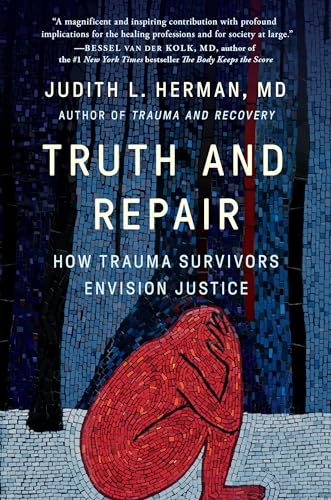 Get the bookBook preview
Judith Lewis Herman. Basic Books, March 2023.
A psychiatrist’s examination of survivors’ accounts, justice and recovery in the aftermath of sexual violence and the #MeToo movement.
Publisher and book presentation
Jackson Katz, “Violence against women: it’s a men’s issue”, TEDxFiDiWomen (2012), published by TED in 2013. A foundational prevention talk about responsibility, bystanders and challenging abusive behaviour.