

I am sharing an extract from an article in which psychologist Jacques Van Rillaer discusses rumination and its relationship with insomnia. The original is “Les ruminations mentales : fonctions, dysfonctionnements, traitements”, Jacques Van Rillaer, abridged in SPS no. 318, October 2016.

In the passage discussed here, Van Rillaer describes how work on muscular relaxation for insomnia in the 1970s led Borkovec to focus on worry and mental activity. Relaxation may help people fall asleep partly by giving the mind something to focus on, rather than solely by reducing physiological arousal. Many people with insomnia worry persistently, including about whether they will be able to fall asleep. Other common concerns involve self-esteem, social evaluation, disapproval and rejection. This paragraph summarises the original passage.
Rumination can delay falling asleep. People who ruminate also tend to go to bed later and sleep less than those who do not[1].
[1] Nota, J. & Coles, M. (2015). Duration and timing of sleep are associated with repetitive negative thinking. Cognitive Therapy and Research, 39: 253–261.
Christophe André discusses rumination (optional video in French)
This French video is retained because the three reflective questions discussed below are drawn from it and translated into English. The recent English-language discussion below provides an alternative perspective on insomnia treatment.
Three questions from Christophe André’s video
Since I began thinking about this problem:
1 – Do I feel that I have moved towards a solution?
2 – Do I feel that I understand it more clearly?
3 – Do I feel relieved after thinking about it?
If the answer to all three questions is no, you may be ruminating rather than thinking constructively.
Pause and take a step back. Rumination often involves an endless series of imagined questions with no clear answer, fuelled by anxiety: Why is this happening? How will it end? Why did I not do this or that?
A way to ease insomnia and rumination
Shift your attention away from the stream of thoughts and towards bodily sensations. A massage, intimacy, swimming, meditation, walking or mindful walking (French-language link) may help. More generally, choose a physical activity that lets you focus on your body.

You will find on this page tools for assessing sleep difficulties and practical suggestions for sleeping better.
Recent video in English
Cognitive Behavioral Therapy for Insomnia in Day-to-Day Practice Mayo Clinic Center for Sleep Medicine, July 2024. A discussion of CBT-I with Dr Mark Hansen, mainly for healthcare practitioners. For guided exercises, see the page on relaxation therapy.
Recommended reading
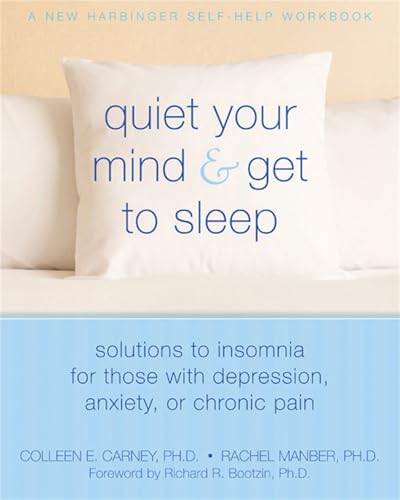 Get the bookBook preview
Colleen E. Carney and Rachel Manber. New Harbinger, 2009.
An established CBT-I workbook addressing worry, habits and sleep difficulties, including insomnia that accompanies anxiety, depression or chronic pain.
Publisher’s information
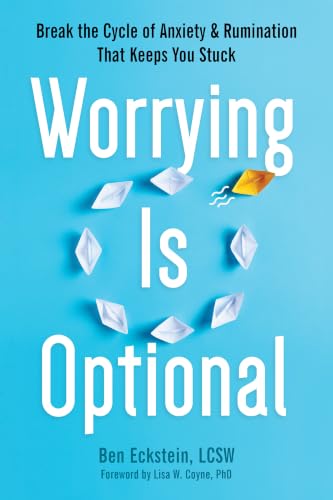 Get the bookBook preview
Ben Eckstein. New Harbinger, November 2023.
A practical companion for understanding repetitive worry and changing your response to it, drawing on CBT, metacognitive therapy and ACT.
Publisher’s information