
Psychological trauma therapy in Singapore
Recovering from psychological trauma. This page explains the assessment and therapy sessions offered by Franck Dibouës, psychologist in Singapore. Get in touch to discuss a session.
The following signs may suggest psychological trauma. Some or all of these symptoms may be present:
- You have experienced a frightening or distressing event and feel different since it happened. You still feel afraid. Sexual assault, rape, threats to physical integrity and situations involving an actual or perceived threat of death may lead to trauma symptoms.
- You re-experience the event through flashbacks, recurring nightmares or intrusive memories that repeat without your control.
- You try to avoid thinking about the event, or avoid places, people and anything that reminds you of it.
- Since the event, you have experienced significant distress, such as changes in mood, disturbed sleep, reduced quality of life, irritability, anger, depression or anxiety.
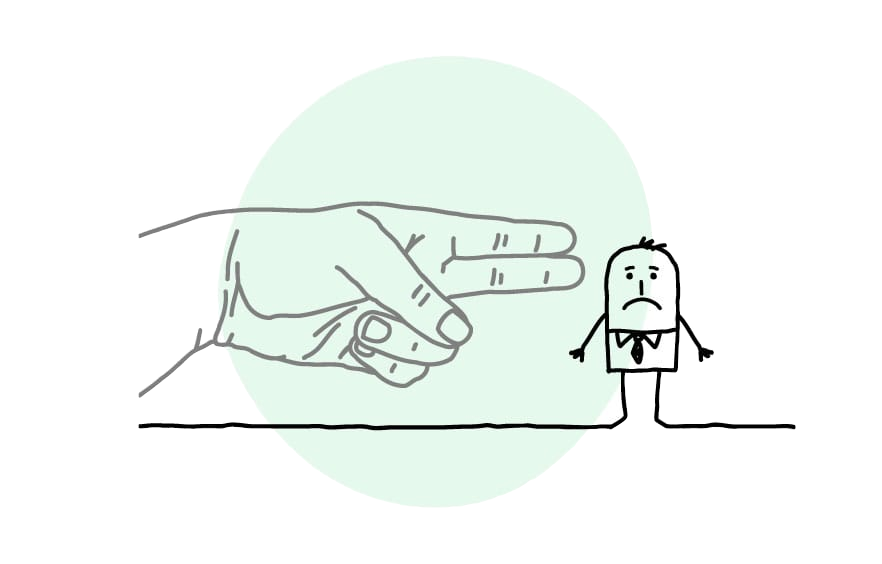
- You sometimes feel disconnected from yourself or your surroundings: “I am here, but not really here”, “I feel foggy”, “It is like a dream” or “I feel wrapped in cotton wool”. The world may also seem strange or less real than before.
- Since the event, you regularly experience a dry mouth, migraines, muscle pain or unpleasant bodily sensations that you did not have before.
- You remain on alert, watch for danger, feel that something bad is about to happen or startle easily.
- You notice a clear difference between life before and after the event.
Trauma can arise in different situations
Trauma can follow accidents, criminal acts, sexual assault, threats, natural disasters, terrorist attacks and many other events (type 1 trauma).
Situations that may seem less dramatic to an outside observer can also cause trauma. These experiences are often repeated over time (type 2 trauma).
Awareness of the trauma and the onset of symptoms may occur immediately or weeks, months or even years after the event. This can make diagnosis and treatment more complex.
In cinema: Rambo and war trauma
In First Blood (1982), John Rambo, played by Sylvester Stallone, is a Vietnam War veteran whose story illustrates post-traumatic stress disorder (PTSD). Isolated, consumed by persistent anger and prone to violent reactions, he struggles to communicate with others without resorting to aggression or confrontation. Memories of war intrude into the present. Psychologically, he seems trapped in his past, as though the danger were still there, even though he has left the battlefield.
This character illustrates some of the difficulties that people who have experienced severe war trauma, including veterans, may face: re-experiencing traumatic events, remaining constantly on alert, anger, isolation and difficulty rebuilding peaceful relationships. These experiences vary from person to person. Violence is not inevitable, and most people with PTSD do not engage in violent behaviour.
I can help you work towards recovery

A psychologist since 2003, I can help you work through psychological trauma.
Passionate about psychology, I continue to train so that I can offer my patients approaches suited to their psychological difficulties.
For psychological trauma, the approaches I use include Cognitive Behavioural Therapy (CBT) and EMDR.
What happens in a session?
I will assess your difficulties with you through a clinical interview. I may use the PCL-5 to screen for post-traumatic stress symptoms in adults and track changes over time. If complex PTSD is being considered, the ITQ can complement this assessment. These questionnaires do not replace a clinical interview and cannot establish a diagnosis on their own.
In therapy, I generally use EMDR, which can help symptoms gradually decrease and support lasting improvement.
EMDR stands for Eye Movement Desensitisation and Reprocessing. It addresses distressing memories and psychological trauma. International treatment guidelines include EMDR among recommended first-line therapies for post-traumatic stress disorder (PTSD).
Assessing symptoms after trauma
The ITQ and PCL-5 questionnaires below can support clinical assessment. They do not replace an interview with a professional.
When might another tool be useful?
When lasting difficulties with emotion regulation, sense of self and relationships accompany trauma symptoms, I may also use the ITQ. It assesses PTSD and complex PTSD according to ICD-11. A history of repeated trauma alone does not establish complex PTSD. Complete the ITQ below.
International Trauma Questionnaire (ITQ)
The ITQ is an adult questionnaire assessing PTSD and complex PTSD according to ICD-11. It includes 12 symptom questions and 6 questions about their impact on daily life. This resource is mainly intended for use with a professional and for clinical training.
Open the ITQ questionnaire in English
Identify the experience that troubles you most and answer in relation to that experience. You do not need to describe it here. You can stop if completing the questionnaire becomes difficult.
0 responses out of 18
The six symptom questions P1 to P6 give a PTSD symptom score from 0 to 24; C1 to C6 give a DSO score from 0 to 24. The six impairment questions are excluded from these scores. An item counts towards the algorithm at a score of 2 or above. A PTSD profile requires an item in each of the three PTSD clusters plus associated impairment. A complex PTSD profile also requires each of the three DSO clusters plus DSO-related impairment. A total-score cut-off must not be used to determine a diagnosis.
Calculated only on this page. Responses are not sent or saved. Reloading clears them.
Source: Cloitre et al. (2018), International Trauma Questionnaire (public domain). Original English items and scoring: reference questionnaire and International Trauma Consortium. National Center for PTSD overview.
PCL-5: assessing post-traumatic stress symptoms
The PCL-5 is a 20-item questionnaire for adults. It helps screen for post-traumatic stress symptoms and track changes over time. It does not replace a clinical interview and cannot establish a diagnosis on its own.
This resource is mainly intended for use with a professional, and for students and trainees. If the event occurred less than a month ago, a clinical assessment of acute stress is more appropriate than drawing a PTSD conclusion from this score.
Open the PCL-5 questionnaire in English
Keep the same event in mind throughout. You do not need to describe it here. Exposure to a traumatic event must be assessed separately during consultation.
Below is a list of problems that people sometimes have in response to a very stressful experience. Keeping your worst event in mind, please read each problem carefully and then select one of the numbers to indicate how much you have been bothered by that problem in the past month.
0 = Not at all · 1 = A little bit · 2 = Moderately · 3 = Quite a bit · 4 = Extremely.
PCL-5: Weathers et al., 2013, public domain. English items from the National Center for PTSD standard form. Original questionnaire · Scoring and interpretation.
The IES-R can remain useful for measuring event-related distress or continuing an existing series of assessments, but it is based on DSM-IV. For a new adult assessment based on DSM-5, the PCL-5 is the main questionnaire used here. About the IES-R.
Changes that may emerge during therapy
Depending on your situation, positive changes may begin to emerge after the first few sessions:
- Type 2 trauma generally takes longer and is more complex to treat than type 1 trauma.
- As therapy progresses, traumatic memories can gradually become less overwhelming and their emotional impact can decrease.
- Successful therapy helps integrate traumatic memories into the wider story of your life. This can be a slow, complex process requiring both your active participation and my professional skills.
Two ways to have a consultation
By video consultation
Wherever you are in the world, you can work with me by video consultation. From the privacy and comfort of your home, we can speak using your computer, tablet or smartphone.
At the practice in Singapore
In Singapore, I welcome you to my practice at 150 Cecil Street, #07-02, Singapore 069543.
Session fees
A 45–60-minute session

- 45–60 minutes focused on your needs
- Work on concrete situations
- Tools you can continue to use
- At the practice or from your home
- Professional confidentiality
250 SGD
Simple, straightforward booking
1 – Click one of the “Get in touch” buttons.
2 – Send me a message on WhatsApp or using the form.
3 – We will discuss your needs and arrange a session.
Feeling anxious about seeing a psychologist?
Booking a session with a psychologist can feel daunting.
This is common. Here are some concerns people often have:
This is a common concern. I am here to help you put your difficulties into words and understand them more clearly.
A psychologist does not judge your behaviour or who you are. Their approach should be caring and respectful.
If coming to the practice feels daunting, you can have a video consultation. I am bound by professional confidentiality, and our conversations remain confidential.
Recognising psychological difficulties and working on them takes courage. Picture the concrete things you would like to do if you felt less inhibited. Working towards these goals can help build your self-esteem and confidence.
Get in touch
You can contact me on WhatsApp by clicking “Get in touch on WhatsApp”.
You can also email me using the form at the bottom of this page.
I will reply as soon as possible.
If you have not received a reply within 48 hours, please check your spam folder. My message may be there.
Further reading and video resources
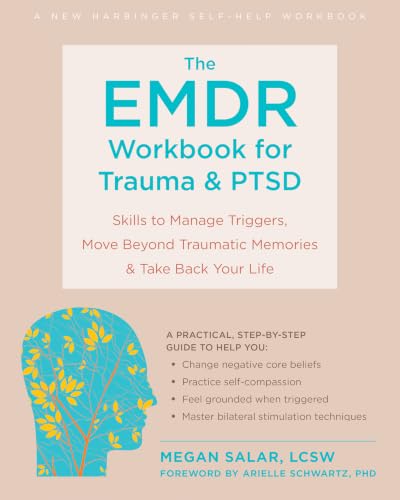 Get the bookBook preview
Megan Salar. New Harbinger, 2023.
Exercises on understanding triggers, grounding and emotional regulation to discuss with your therapist.
Publisher and book presentation
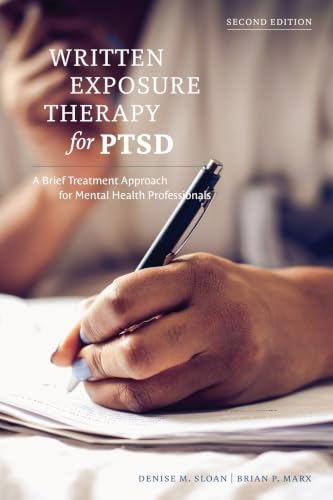 Get the bookBook preview
Denise M. Sloan and Brian P. Marx. APA, second edition, January 2025.
A professional manual on written exposure therapy, including adaptations for telehealth and different clinical settings.
Publisher and contents
EMDR International Association, What is EMDR Therapy? (2023). A four-minute introduction to the eight phases of therapy and what clients may experience.
APA clinical practice guideline for PTSD in adults, updated 2025.
Read the article on psychological trauma for additional references.