
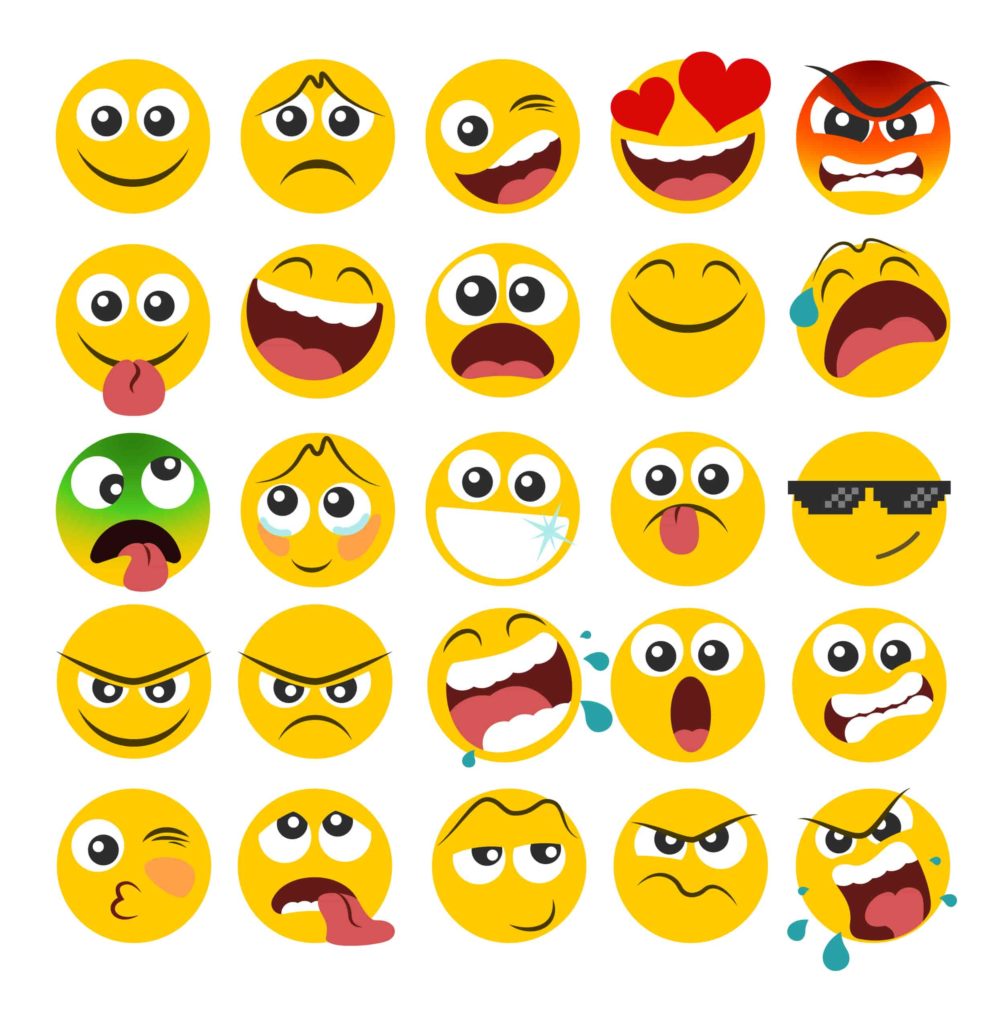
I have just reread the new edition of “L’affirmation de soi par le jeu de rôle” by Chaperon, Carriou-Rognant and Duchesne. A part is devoted to the expression of emotions, I propose you a passage of it:
Ambivalence in emotional expression, a stress factor
“Our Western societies both value and condemn emotional expression. Indeed, the lack of control over emotions is socially perceived as a sign of weakness and paradoxically it is recommended to express one’s emotions: “you have to say what you think”. Already, there is cultural ambivalence as the idea coexists that emotions should be expressed openly, but that at the same time, the expression of one’s emotions implies a state of vulnerability.
Some research tends to show that expressing emotions is a healthy act (Pennebacker, 1997). However, other research suggests that the non-expression of emotions is not pathogenic in itself; it is the association of emotional non-expression with the deep desire to express one’s emotions that is pathogenic (King & Emmons, 1990).
Ambivalence in emotional expression is linked to inhibition; it is a factor of psychological “malaise”, all the more so since this ambivalence in emotional expression inevitably generates rumination, “emotional perseverance” (Katz & Campbell, 1994). It would be a non-negligible factor in physical disorders, insofar as it increases the activity of the autonomic nervous system. Ambivalence in emotional expression would also be a factor of psychological suffering in emotionally charged situations insofar as it would generate an inability to restructure cognitive distortions and stressful thoughts. Indeed, cognitive and behavioral conflicts are closely linked to :- The desire to express confronted with the active repression of the emotional expression.
- The expression of emotions and then the regret of having expressed them.
-
It is therefore proven that expressing emotions is useful for health and conducive to lasting relationships, but in the right context and with the right person (Hahusseau, 2013). Studies in social psychology (Rimé) show that contrary to current stereotypes, adult men communicate their emotions as much as women, but to a much smaller audience (the people to whom they show themselves naked). The frequency of emotion sharing increases with age in adults.
Excerpt from “L’affirmation de soi par le jeu de rôle” by A.F. Chaperon, A.M. Carriou-Rognant and N. Duchesne Get the bookBook preview
L’affirmation de soi par le jeu de rôle
Anne-Marie Cariou-Rognant, Anne-Françoise Chaperon and Nicolas Duchesne. Dunod, 3rd edition, 2019. French-language book, retained as the original source of the passage discussed above.
View this book on Amazon
 Get the bookBook preview
Paul Ekman. Holt Paperbacks, second edition, 2007. English-language edition.
View this book on Amazon
Explore universal emotions on the Paul Ekman Group website.
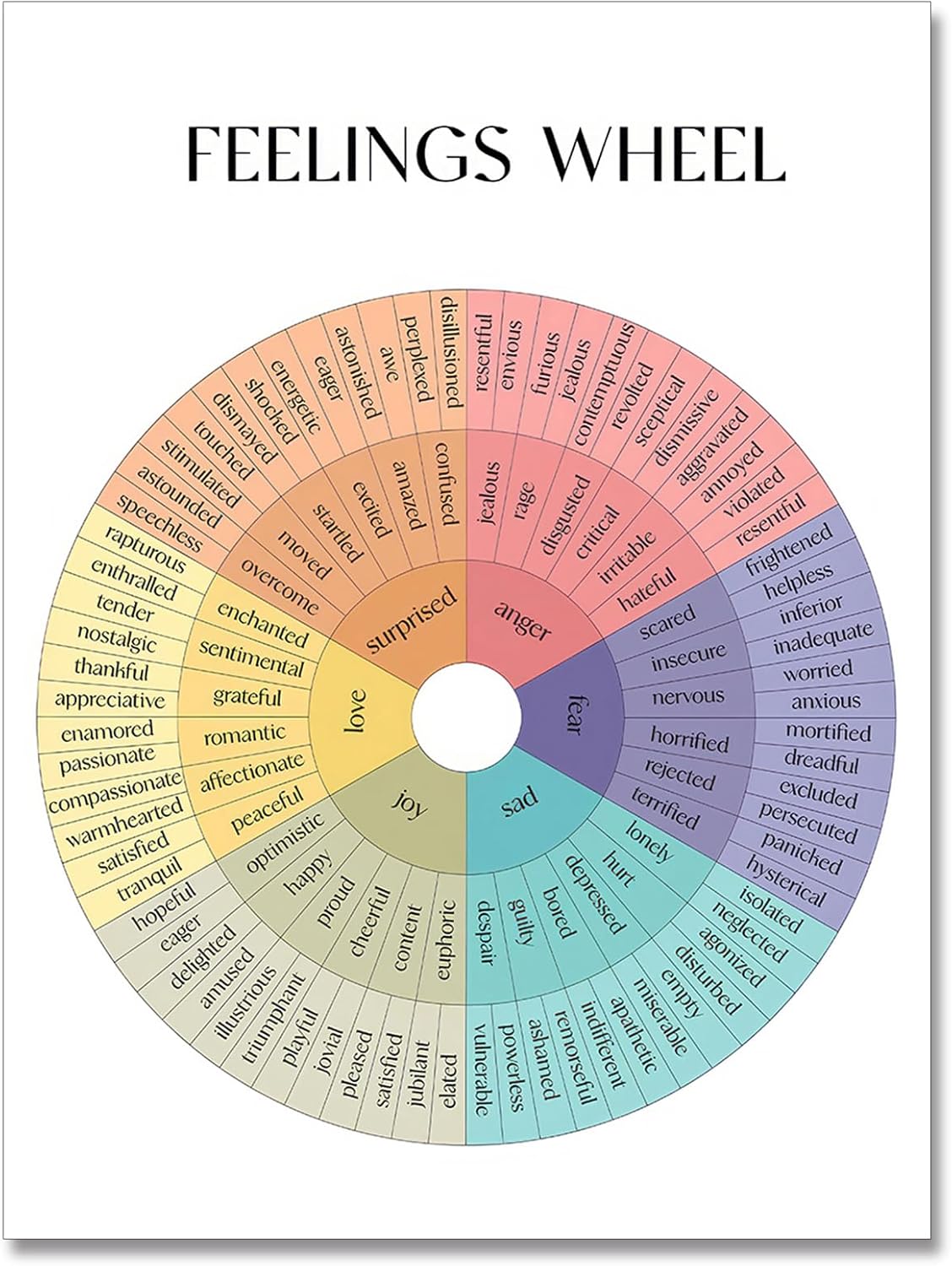
The emotions wheel
This feelings wheel helps you identify a broad emotion, then find more precise words for what you feel by moving towards the outer rings. For further reading, explore assertiveness and stress assessment and management.
Video in English: understanding emotional responses
How to manage your emotions TED-Ed. A short introduction to understanding and regulating emotional responses.
Recent reading
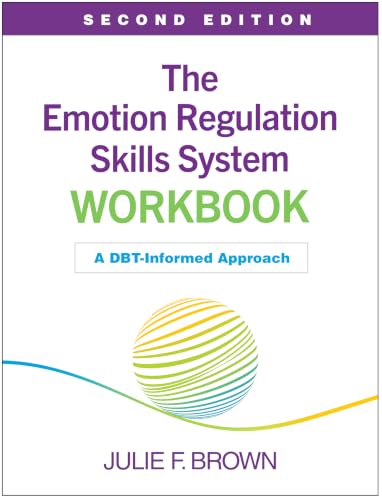 Get the bookBook preview
Julie F. Brown. Second edition, Guilford Press, paperback published December 2025.
A structured companion for learning emotion-regulation skills, with examples and worksheets to use within an appropriate skills programme.
Publisher’s information