

This article presents three accounts from people who had near-death experiences in very different circumstances.
For each account I have selected, I highlight the features that can help you understand the phenomenon and recognise its recurring elements.
I have been a clinical psychologist for twenty years and have studied near-death experiences and related phenomena for many years.
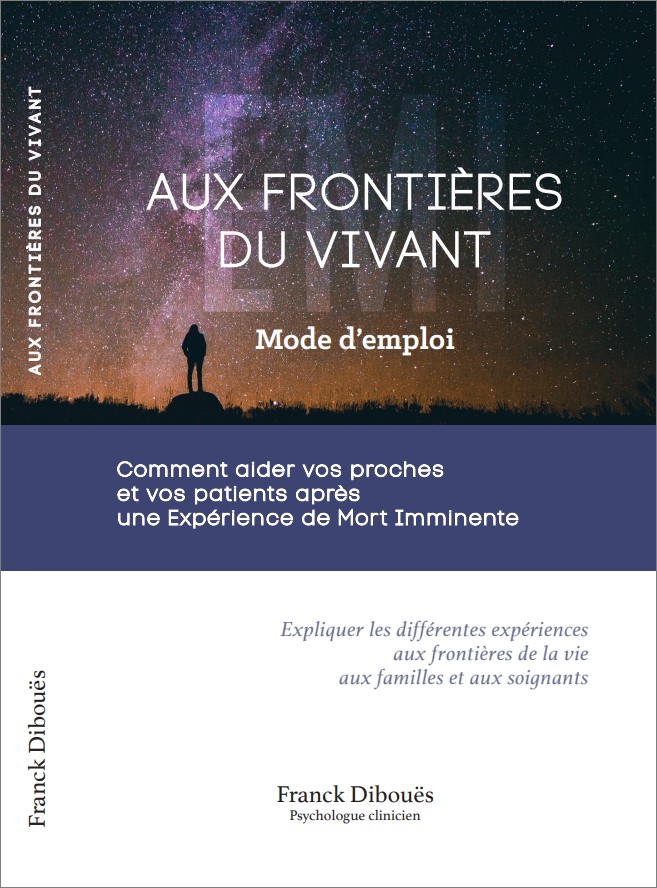
I also published Aux frontières du vivant, mode d’emploi, a French-language book devoted to understanding near-death experiences and supporting the people who have them.
Defining a near-death experience
Near-death experiences, or NDEs, are subjective psychological experiences with spiritual and timeless dimensions, reported across cultures. They may involve several stages, with variations between cultures, individuals and experiences.
They can arise in many circumstances, ranging from an ordinary state of consciousness to a life-threatening medical emergency.
They may occur in association with intense fear, meditation or trance, and particularly during a critical medical event such as cardiac arrest.
1) An NDE following food poisoning
This is Andréa Pfeifer’s account of a near-death experience following food poisoning. The original video is in French.
- This account brings out a common and important theme: the need to return to ordinary life, and how difficult that return can be during or after an NDE. Here, Andréa Pfeifer became acutely aware of an unexpressed talent and felt she needed to return to share it.
- A sense of communion with the whole universe is another recurring feature. Some experiencers describe having access to universal knowledge, feeling that they know everything about everything, an experience sometimes compared to an extraordinarily powerful search engine. This particular feature is not described in this account.
- Returning to the body is often uncomfortable. Experiencers may describe an intensely cold body, sometimes in the context of reduced body temperature after cardiac arrest or a severe medical crisis, a body that feels too confined, or pain associated with injuries or the event that led to the NDE.
- The major challenge can be mourning the loss of that expansive state of peace, often described as a homecoming, and returning to a body that is ill or injured. Some people need years to integrate that loss. Others continue to feel a deep nostalgia for the experience and associate it with a sense of home that remains important to them.
- One lesson Andréa Pfeifer drew from her NDE was the need to move beyond her limits, comfort zone and limiting beliefs, and dare to live fully. An NDE may bring a realisation that life is to be lived wholeheartedly, sharing one’s gifts and talents with the world.
- Andréa Pfeifer explains that the experience helped her overcome the lack of confidence that had prevented her from releasing her music. Her first album came out six months after her NDE.
2) An NDE during surgery
This is Nicole Dron’s account of an NDE following severe bleeding during an operation. The original video is in French.
In 1968, Nicole Dron had what is called a complete or transcendent NDE. Other experiences are partial: the person describes leaving the body and observing the immediate surroundings, without entering the mystical or spiritual dimension that Nicole describes after her out-of-body experience in the operating theatre.
These experiences can be particularly powerful because they lead us to reconsider our time on earth, our commitments and, ultimately, the meaning of life.
In my book about NDEs and other experiences at the boundaries of life, I describe different types of NDE, including three forms of distressing NDE, children’s experiences, experiences reported by people blind from birth and shared experiences. The book is available through the Amazon buttons on this page.
Nicole Dron’s rich account includes many features characteristic of complete NDEs:
- It highlights how detached a person may feel from the physical body once the out-of-body phase begins.
- The apparent disappearance of ordinary physical constraints is striking in this account: travel in consciousness and movement through walls or other people’s bodies without resistance or surprise.
- Nicole describes details that, in her account, were subsequently corroborated by others: a child nodding into a plate, her husband’s lack of concern, and remarks about her condition and a blood-stained sheet. In my view, such reported corroborations are central to questioning a purely hallucinatory explanation.
- The presence of light, a being of light conveying infinite love, and spiritual beings or guides.
- Colours unlike those seen in everyday life, together with a feeling of unity with all creation.
- Encounters with deceased loved ones.
- Telepathic communication.
- An expanded or absent sense of time, with many profound, highly detailed events experienced within what was described as only forty-five seconds.
- A life review in which the person feels the effects their behaviour had on others, a form of heightened empathy.
- A feeling of boundless knowledge, visions interpreted as prophetic, such as mass unemployment, recurring climate disasters or a hostile natural world, memories understood as past lives, and visions of future events involving the deaths of relatives.
- The understanding that certain earthly experiences or trials are necessary for the soul’s growth.
- The feeling and conviction that the reality encountered during the NDE is more real than ordinary earthly reality.
- The message that part of the experience must be forgotten before returning to earthly life.
- Profound and painful isolation afterwards. Many people censor themselves to avoid unsettling those around them. Social pressure may lead them to remain silent and feel that they are betraying themselves. Nicole describes how distressing it was to be unable to speak about what had happened.
- Medical professionals may respond poorly to NDE accounts. They should instead acknowledge the reality of the person’s experience without imposing an interpretation, and become an early source of help with integrating it.
- Accounts and studies in this field describe an integration process that may take ten years or longer. A medical team’s response, whether dismissive, mocking or attentive and kind, can strongly influence how a family receives the experience and the sometimes difficult personality changes that follow.
3) An NDE following a road accident
This is Joachim Schoss’s account of an NDE following a road accident. The original video is in French.
This testimony is interesting for several reasons, including the identity of the experiencer: Joachim Schoss founded the German Scout24 group, described in the original article as a successful business employing more than 800 people.
His public profile might have encouraged him to keep the experience private, since NDEs can remain difficult to discuss in the business world. Sharing it publicly therefore involved a significant personal risk.
His account includes many features characteristic of a complete or transcendent NDE:
- A tunnel containing figures and a light radiating love. The light is intensely attractive, leaving him torn between moving towards it and remaining in earthly life with, and for, his children.
- He emphasises how difficult it is to find words adequate to describe the experience.
- A life review in which financial and social success recede into the background and relationships become central. He considers the kind of person he has been as a father, husband, employer and colleague.
- A sense of bilocation, or being in two places at once. While experiencing the tunnel, light and non-physical beings, he also describes awareness of surgeons discussing his apparently hopeless condition and whether to stop the operation. He does not describe the usual viewpoint above the body at that point, but simultaneous presence in the tunnel and operating theatre.
- He regards the NDE as the most important and decisive event of his life. Although the accident cost him an arm and a leg, he considers its effect on his personality even more profound than the physical disability.
- A period of integration followed. He describes having to change how he lived and ordered his priorities. Before the accident, developing the business came first. Afterwards, his family and children became his first priority, with the business coming later.
- Like many experiencers, he describes losing his fear of death. His account associates the light with feeling welcomed, loved and comforted, and with the possibility of reunion with loved ones who died before him.
- He was surprised by the depth of the changes within him. At first, he did not connect them with the NDE. Reading about the subject helped him recognise that relationship.
- He describes moving away from religious institutions and dogma while feeling closer to God through a spirituality lived in everyday life.
- He describes a sense of separation between his body and consciousness. Some experiencers find bodily practices helpful in reconnecting with the body, such as appropriate exercise, massage, yoga or intimacy. The task is to reclaim the body and accept living within it, despite its limitations and pain.
- He also reports psi phenomena after the NDE, including anticipating who would enter his hospital room a few minutes before they arrived.
- Such experiences may be difficult to accept, particularly for someone whose materialist understanding of the world leaves no place for them. This may affect experiencers themselves or loved ones who find mystical, spiritual or psi-related narratives hard to receive.
- He describes a new sense of unity connecting him with the rest of humanity: physically distinct individuals belonging to a larger spiritual whole. He believes humanity would be kinder if everyone shared that experience of unity. Similar feelings of connection are often described after NDEs.
Further reading
If these questions intrigue or fascinate you, discover Aux frontières du vivant, mode d’emploi. It explores near-death experiences and how to support the people who have them.
The book offers practical ways to help people integrate an NDE, and discusses responses to end-of-life visions or subjective experiences of contact with someone who has died.
I wrote this book for experiencers, their loved ones and healthcare professionals.
If you have had an NDE, or are close to someone who has, and are struggling with the changes it has brought, the book aims to help you:
- Understand why NDEs and related phenomena are often dismissed in Western societies.
- Gain perspective on the relationship adjustments that may follow an NDE.
- Understand that NDEs and related phenomena are real experiences that can transform the lives of those who have them and their loved ones.
- Maintain the relationship with the person.
- Better understand what the person is living through and feeling, and remain open to their difficulties while supporting them through the crisis.
- Listen to someone who has had an experience at the boundaries of life, helping them integrate it into their everyday existence.
The book is also intended for healthcare professionals who want to:
- Understand why their university training may not have prepared them to support experiencers’ difficulties.
- Provide better care and support to patients who have had an NDE or a related experience, and to their loved ones.
- Develop an effective psychotherapy plan with an experiencer, for psychotherapists, psychologists and psychiatrists.
- Anticipate personality changes that may emerge over the months and years following an NDE.
- Assess a hospital service’s needs in welcoming and supporting people who report NDEs or related phenomena.
- Assess patients’ NDEs using standardised tools such as the Greyson Scale and the NDE-C Scale.
- Know what to say and do, and what is better avoided, when supporting people who report experiences at the boundaries of life, including end-of-life visions, terminal lucidity or subjective contact with a deceased person, and when supporting their loved ones.
You can discover and buy the French-language book on Amazon using the button below:
Recommended article
To discover further NDE accounts, read Near-death experiences: deeply moving accounts.