

Why do we eat too much? Most of the time, we are seeking immediate satisfaction, something pleasurable… Pleasure is linked to a neurotransmitter (a chemical messenger in the brain), dopamine. Activities that generate pleasure trigger dopamine spikes that reinforce behaviour by encouraging us to repeat it. This explains the link between dopamine and addiction. People prone to dependency, those who take major risks and sensation-seekers of all kinds have high dopamine production. But dopamine is an antagonist of serotonin: when dopamine rises, serotonin falls, and vice versa.
Conversely, serotonin is linked to a high, steady level of satisfaction. The presence of serotonin in the brain is associated with an even mood, lasting satisfaction and an absence of risk-taking… with happiness! At a neurobiological level, we observe that pleasure and immediate satisfaction (dopamine) are opposed to happiness (serotonin)…
Robert Lustig[1] observes that everything that boosts dopamine costs money and may trigger dependency (with or without a substance), whereas what triggers serotonin secretion is free and carries no risk of addiction.
Activities involved in serotonin secretion include:
– Taking part in activities that go beyond ourselves and our ego. For example, contributing to improving society or other people’s living conditions. Some people experience this through their work (some healthcare professionals, for instance…), but most employers have goals other than improving other people’s quality of life or going beyond oneself… These are therefore mainly activities outside professional life that connect us with others through real face-to-face encounters (see the section on stress management and social support).
– Healthy daily habits, such as getting enough sleep (serotonin secretion is linked to sleep), being sufficiently physically active (avoiding a sedentary lifestyle), and reducing interruptions to tasks, which cause displeasure and discomfort… Pursuing activities that absorb us so completely that we lose track of time. You will find further advice in the sections of this book on stress management and mental practices that focus awareness.
– Cooking for ourselves and others helps reduce sugar consumption (see this book’s sections on sugar and ultra-processed foods). Cooking with fresh ingredients also increases your intake of omega-3 fatty acids and dietary fibre. In doing so, you improve the quality of your gut microbiota, which in turn affects your mood and mental health.
The corporate world sells you dopamine spikes through its adulterated food. Being excessively drawn to shopping (marketed places and foods, fashion, attractive electronic devices, a “bling-bling” lifestyle…) leads away from happiness. Distance yourself from the siren calls of consumerism. When you do something, ask yourself whether it makes you happy (serotonin) or soothes you (dopamine): pleasure versus need…
Remember:
Pleasure (dopamine) is different from happiness (serotonin).
When dopamine rises, serotonin falls.
Biochemically, happiness (peace and the long term) is opposed to immediate satisfaction (excitement and the short term).
Sugar acts on dopamine circuits like a drug, but it is cheaper, easily accessible and consumed from childhood.
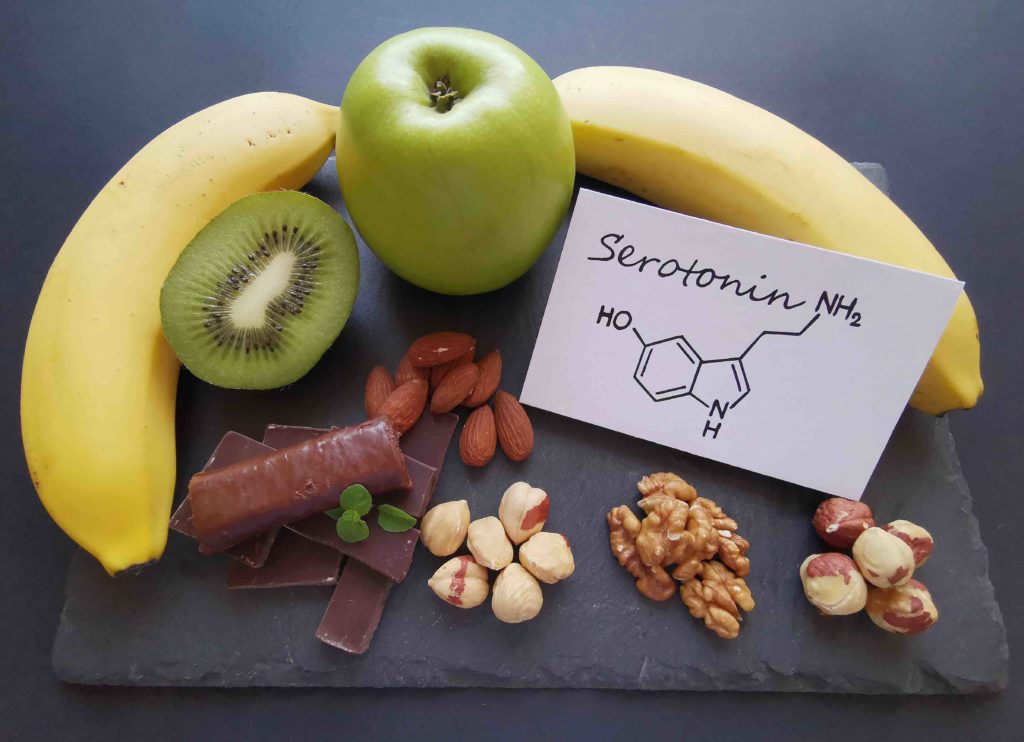
Serotonin is stimulated by:
– What we give, in general…
– Rewarding social relationships
– Giving ourselves and our time
– Salmon, fish oils, linseed oil and dark chocolate
– Physical activity (through an increase in tryptophan)
– Sunlight (weak scientific evidence)
– Stress management (as presented in this book)
– Body care such as massages, saunas and spas
Dopamine is stimulated by:
– What we take, in general…
– Sugar
– Ultra-processed food
– Drugs (opioids, cocaine, cannabis)
– Coffee and stimulants such as energy drinks
– Alcohol
– A lifestyle based on buying things
Activities associated with dopamine cannot lead to happiness because they lower serotonin levels!
Cortisol, the stress hormone, tends to disrupt serotonin receptors. A stressed person who eats ultra-processed food increases their dopamine (and lowers their serotonin), while cortisol further interferes with serotonin synthesis. This is the perfect recipe for creating the anxious and depressive states that are increasingly common in Westernised societies!
The pursuit of pleasure can lead to dependency (dopamine).
Happiness does not lead to dependency (serotonin).
Dopamine disrupts serotonin, so it is impossible to be happy (serotonin) through behaviour centred on seeking pleasure (dopamine).
[1] The Hacking of the American Mind: The Science Behind the Corporate Takeover of Our Bodies and Brains, Robert Lustig, 2017.
Passage taken from La Tête et le Ventre:
 Get the bookBook preview