
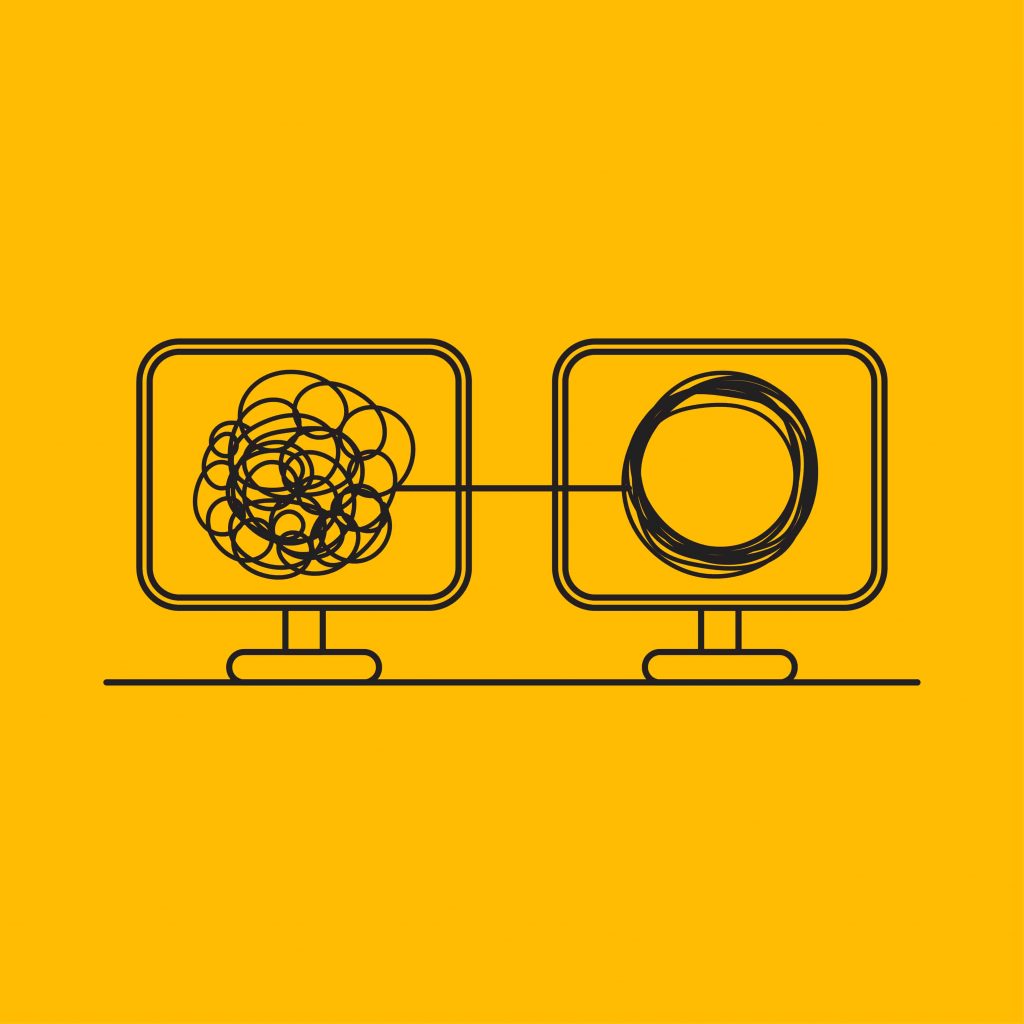
Are online psychotherapy sessions effective?
Several studies suggest that online therapy can be effective, including in comparison with face-to-face approaches. Some research reports favourable outcomes for online interventions[1] [2]. Results depend on the condition, intervention and people studied; they do not establish that every online therapy is superior to in-person care.
Is online care becoming established alongside face-to-face therapy?
When this article was first written, online psychological care was still finding its place in France, and most people looking for a psychologist imagined a traditional face-to-face consultation. The original discussion used appointment platforms such as Doctolib as an example of the difficulty faced by practitioners working exclusively online from abroad. These observations describe that earlier context, rather than the platforms’ current policies. Online sessions can offer practical advantages in terms of travel, time and convenience.
Has online therapy been more widely requested elsewhere?
The original article noted greater demand in North America and Nordic countries such as Sweden than in France. It anticipated that the use of online psychotherapy would grow in Europe. This was a reflection on how practice was developing at the time.
Who may be particularly interested in online therapy?
Expatriates are one group for whom online psychotherapy can be especially useful. Although some therapists work abroad, access to a French-speaking psychologist can be more limited than in France.

If you are looking for a psychologist, can you search directly on Google?
As with in-person sessions, recommendations from people you trust can help you find a psychologist. Many therapists offer more than one consultation format. When meeting a psychologist online, check their professional qualifications and do not hesitate to ask for copies of their diplomas. I have digitised mine and can show them on request. The quality of the relationship also matters: you should feel able to trust the practitioner, without feeling judged or manipulated. Empathy and care are as important online as they are face to face.
Could most therapy sessions eventually take place online?
Research provides evidence that online interventions can help[3]. It does not follow that online sessions are always better or worse than face-to-face care. The two approaches can coexist, with people choosing the format that suits their circumstances and therapeutic needs.
[1] Journal of Medical Internet Research. 2017 May 15;19(5):e157. doi: 10.2196/jmir.7274., Web-Based Cognitive Behavior Therapy for Depression in People With Diabetes Mellitus: A Randomized Controlled Trial. ,Newby J, Robins L, Wilhelm K, Smith J, Fletcher T, Gillis I, Ma T, Finch A, Campbell L, Andrews G.
[2] Cyberpsychology, Behavior, and Social Networking. 2013 May;16(5):3707. doi: 10.1089/cyber.2012.0195. Epub 2013 Mar 26. Impact of exchanges and clienttherapist alliance in onlinetext psychotherapy., Reynolds DJ Jr, Stiles WB, Bailer AJ, Hughes MR.
[3]Psychological Medicine, 2017 Dec 13:111. doi: 10.1017/S0033291717003567. Online prevention of disordered eating in atrisk youngadult women: a twocountry pragmatic randomized controlled trial. Wilksch SM, O’Shea A, Taylor CB, Wilfley D, Jacobi C, Wade TD.