

Personality is a relatively stable psychological pattern, shaped both by inherited characteristics and by the environment. It has several aspects, which we will explore here.
What is personality?
In Latin, persona means a mask. The word is also associated with personare, meaning to speak through.
Personality is what everyday language often calls character. It is a relatively stable psychological pattern that tends to recur across time and situations.
We often notice other people’s personality characteristics much more easily than our own.
Personality characteristics are often described with adjectives: authoritarian, sociable, proud, conceited, altruistic, suspicious, serious, conscientious, flirtatious, selfish, perfectionistic…
Here, perhaps more than elsewhere, a problematic pattern can be an exaggeration of an ordinary characteristic.
The two major components of personality
Temperament refers to the innate component of personality. Personality therefore has a biological aspect: we are not born as a completely blank slate, but already have certain individual tendencies.
Character refers to the part of personality shaped by upbringing and educational influences. In this sense, it is acquired through experience.
Character and temperament interact and become intertwined. Each person develops through inherited characteristics from both parents and the influence of their social environment. We are at the meeting point of nature and nurture.
Two important distinctions in personality
A personality trait = a relatively stable, enduring characteristic.
A personality state = a characteristic expressed at a particular moment or in a particular situation.
If we observe someone who has just started a new job trying to get to know colleagues, that alone does not establish a sociable personality trait. They may be behaving sociably because they feel it is necessary to fit into the new role. We do not yet know whether they are sociable in other circumstances or whether this is their usual way of being. We are observing a sociable state, without knowing whether sociability is a trait. This is a distinction between a temporary state and a broader personality pattern.
When two people discuss someone they both know, they may unknowingly be debating the difference between a trait, an enduring characteristic, and a state, a temporary response to circumstances. For example:
“Michel is a real pessimist.” (A personality trait.)
“No, he is still shaken by his divorce.” (A temporary state.)
“But I have always known him to be like that.” (A trait.)
“Not at all. When he was a student, he was always making people laugh!” (A different state or period of life.)
This example raises another question: has Michel’s personality changed over time? Perhaps he was habitually light-hearted when young and later became more consistently pessimistic. Some personality traits do change over the course of a life.
Difficult personalities in cinema
Films can make personality patterns visible when they become rigid, repetitive and damaging to relationships. These characters illustrate traits and behaviours rather than established clinical diagnoses.

Miranda Priestly
Narcissistic traits. Miranda makes excessive demands and belittles her colleagues. Her need to maintain a superior position leaves little room for other people’s needs. She illustrates a working relationship organised around power, with little mutual consideration.
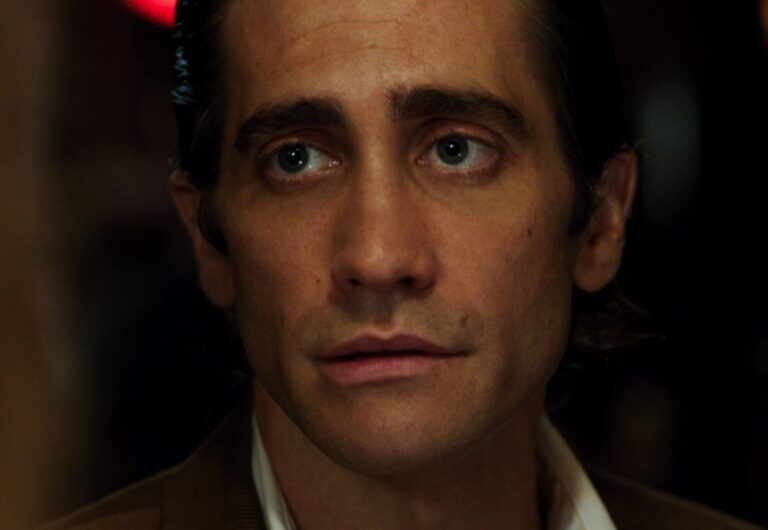
Lou Bloom
Antisocial traits. Lou uses people to get ahead, lies and progressively crosses moral boundaries. Relationships become tools for personal gain. The character illustrates manipulation, a lack of empathy and disregard for the consequences of his actions.

Tom Ripley
Envy and manipulation. Tom envies other people’s status and lives, then constructs false identities to gain access to them. He deceives, manipulates and destroys relationships that threaten his façade. His story shows how a fragile self-image can become entangled with exploiting others.
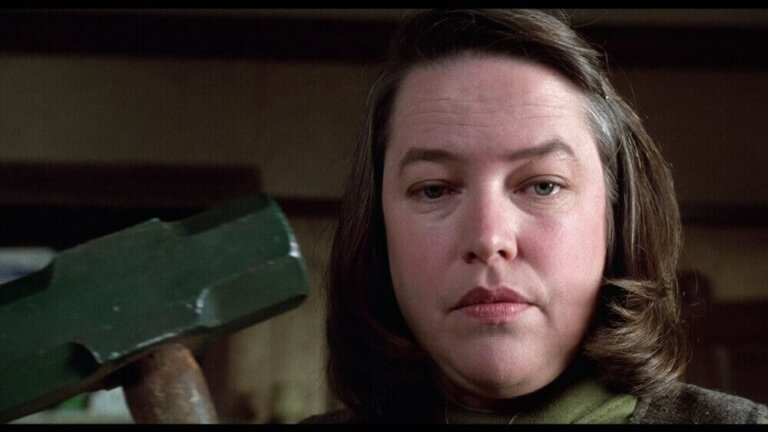
Annie Wilkes
Possessiveness and coercion. Annie’s admiration for a writer turns into a pattern of coercive control. She alternates care, demands and anger when he resists her control. The character illustrates a relationship in which the other person’s autonomy is replaced by submission to her absolute power.

Nurse Ratched
Rigidity and control. Ratched maintains authority through rigid rules, guilt and humiliation. Beneath her outward calm, she struggles to tolerate disagreement. She illustrates a controlling relational style that puts obedience ahead of listening and personal autonomy.

Daniel Plainview
Distrust and domination. Daniel approaches relationships through rivalry and distrust. He seeks to dominate and uses those close to him to serve his goals. His ambition becomes consuming, while hostility and difficulty trusting others gradually isolate him.

Melvin Udall
Rigidity and obsessive-compulsive traits. Melvin clings to his routines, struggles with unexpected changes and tries to control everyday life. His rigidity and inflexibility make relationships difficult. The film also depicts OCD: his rituals alone do not establish a diagnosis of obsessive-compulsive personality disorder.
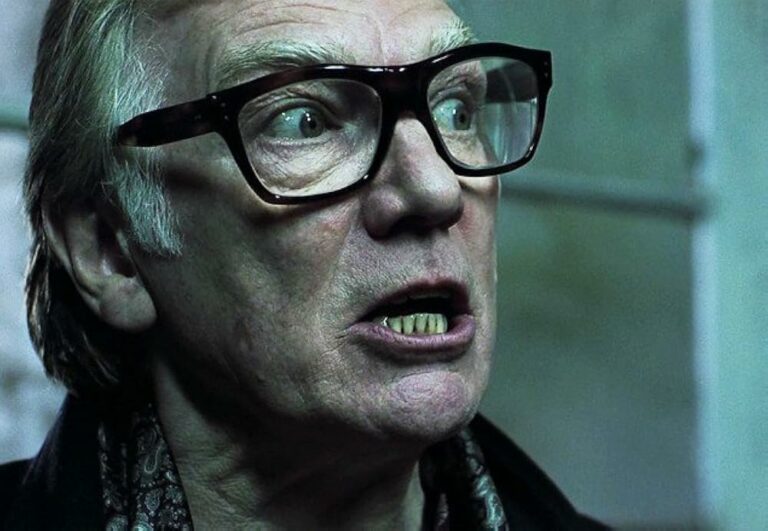
Brick Top
Antisocial and psychopathic traits. Brick Top enforces his authority through intimidation, manipulation and calculated violence. He treats people as objects and appears indifferent to their suffering, showing no apparent remorse. This fictional character illustrates emotional callousness and exploitation of others.
Early attempts to classify personalities
People have long tried to classify one another according to psychological characteristics. These were effectively personality classifications, even when that word was not used, as in the work associated with Hippocrates.
Categorical approaches to personality
Categorical classifications place people into predefined groups, as in Hippocrates’ theory of the humours (French-language overview) or Kretschmer’s four broad personality types.
Hippocrates (4th century BCE)
| Predominant fluid | Personality type | Characteristics |
|---|---|---|
| Blood | Sanguine | Lively, emotional |
| Lymph | Lymphatic | Slow, cold |
| Yellow bile | Bilious | Irascible, bitter |
| Black bile | Melancholic | Gloomy, pessimistic |
Kretschmer’s four broad personality types (1925)
| Type | Physique | Personality | Actor |
|---|---|---|---|
| Pyknic | Short and round | Expansive, cheerful, spontaneous, realistic |
Gérard Jugnot Danny DeVito |
| Leptosome | Tall and slim | Reserved, aloof, dreamy |
Jean Rochefort Clint Eastwood |
| Athletic | Broad build and muscular |
Impulsive, irascible |
Lino Ventura Harvey Keitel |
| Dysplastic | Poorly developed, atypical physique |
Asthenic, feels inferior |
Has not found success in cinema |
Categorical classifications offer memorable descriptions, but have a major limitation: real people are more varied and nuanced than fixed categories suggest. This helped encourage psychologists and psychiatrists to develop dimensional approaches alongside categorical descriptions.
The dimensional approach
One dimensional approach is R. B. Cattell’s 16PF, first published in 1949. The edition discussed here dates from 1993. Personality questionnaires are used, among other settings, in human resources to explore how a person functions individually and within a group. The Myers–Briggs Type Indicator (French-language overview) is another well-known personality tool, although its typological approach differs from a continuous dimensional model.
R. B. Cattell’s approach and the 16PF
reserved ………………………………. sociable
less intellectually able …………… more intellectually able
emotionally reactive ……………. emotionally stable
submissive ………………………….. dominant
restrained …………………………… enthusiastic
opportunistic ………………………. conscientious
shy ……………………………………… uninhibited
robust ………………………………… sensitive
confident ……………………………. suspicious
practical ……………………………… imaginative
forthright ……………………………. guarded
placid ………………………………….. apprehensive
conservative ……………………….. open to radical change
dependent ………………………….. independent
less self-controlled ………………. more self-controlled
relaxed ………………………………… tense
Another approach to assessment is the MMPI, the Minnesota Multiphasic Personality Inventory. The historical versions discussed here explore ten broad clinical dimensions through several hundred true-or-false responses about oneself. The original inventory was published in 1943, and the MMPI-2 revision in 1989.
Cloninger’s dimensional model (late 1980s)
This model describes seven components of personality. It first distinguishes four dimensions of temperament, regarded as substantially innate because they appear early in life and have inherited influences. These dimensions shape early learning.
Cloninger’s four temperament dimensions are:
1: Novelty seeking. A high score describes a tendency to explore the environment actively, respond with interest to new experiences and try to avoid frustration.
2: Harm avoidance. A tendency to worry, keep a low profile to avoid unpleasant surprises, and hold back when uncertain because of possible adverse consequences.
3: Reward dependence. A need for approval, support and frequent reassurance or rewards from others.
4: Persistence. A tendency to continue an activity determinedly despite tiredness or frustration.
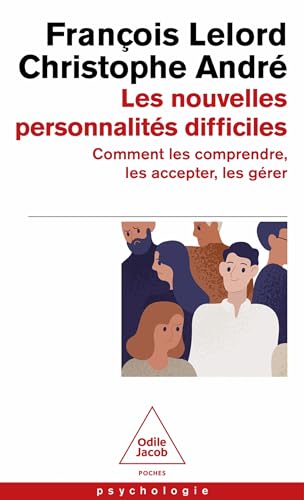
François Lelord et Christophe André illustrate these dimensions with a light-hearted restaurant example. In summary:
- The reward-oriented diner chooses a familiar favourite and looks forward to enjoying it.
- The novelty seeker is drawn to an unfamiliar dish.
- The harm-avoiding diner checks the menu carefully for foods that might disagree with them.
- The persistent diner keeps looking patiently for parking, despite being late and hungry.
Cloninger adds three dimensions that he describes as character. Compared with temperament, character is understood as more responsive to learning and educational experience.
Cloninger’s three character dimensions:
- Self-directedness. This component involves self-esteem, a sense of being able to influence one’s life and environment, and the ability to set goals.
- Cooperativeness. Acceptance and understanding of others, empathy and altruism.
- Self-transcendence. People scoring highly on this dimension may experience a strong sense of meaning and belonging to the world, often with a spiritual rather than a purely materialist outlook.
Explore the five broad dimensions of your personality
The Mini-IPIP is a 20-item self-report questionnaire for adults. It explores extraversion, agreeableness, conscientiousness, emotional reactivity and intellect / imagination. Allow about 4–5 minutes.
Instrument type: personality trait questionnaire, without a diagnostic purpose.
Strengths : Brief, based on the Big Five model, and studied in the original English version and a French adaptation. It can help start a discussion about your usual patterns.
Limitations : Four items per dimension provide a broad overview, with less precision than a longer inventory. Self-perception, context and mood affect responses. This questionnaire measures neither IQ nor personality disorders.
Complete the personality questionnaire
Answer all 20 statements based on how you generally are across different situations, rather than on one particular day. There are no right or wrong answers. Read each statement as beginning with “I…”.
Your answers and results stay in this page. This form does not send them to the website or store them. Reloading or leaving the page clears them.
Your Mini-IPIP profile
Each dimension has a separate score from 4 to 20, also shown as a mean from 1 to 5. There is no overall personality score. The chart shows the possible score range, not your rank in the population. The numerical midpoint (3) is not a clinical norm.
Results describe your self-reported responses, without defining your identity. Neither end of a dimension is ideal in every situation. These scores cannot diagnose a disorder. Discuss them with a psychologist if you would like to explore them further.
Sources and scoring
Items drawn from the public-domain International Personality Item Pool. Reverse-keyed items are automatically recoded (6 minus the response), then the four responses in each dimension are added together.
The ten personality disorders in the DSM-5-TR
The DSM-5-TR describes ten personality disorders, organised into three clusters. These involve enduring, inflexible patterns that cause significant distress or difficulties in relationships and everyday life.
Cluster A: eccentric
Paranoid personality disorder. Persistent mistrust and a tendency to view other people’s intentions as threatening without sufficient justification.
Schizoid personality disorder. Detachment from relationships, a preference for solitude and limited emotional expression.
Schizotypal personality disorder. Difficulty with close relationships, unusual thoughts or perceptions and eccentric behaviour.
Cluster B: dramatic
Antisocial personality disorder. Repeated disregard for other people’s rights, deceitfulness, impulsivity and limited remorse.
Borderline personality disorder. Unstable emotions, relationships and self-image, with an intense fear of abandonment.
Histrionic personality disorder. A strong need for attention and theatrical or excessive emotional expression.
Narcissistic personality disorder. A sense of superiority, a need for admiration and difficulty recognising other people’s needs.
Cluster C: anxious
Avoidant personality disorder. Avoidance of relationships through fear of rejection, criticism or feeling inadequate.
Dependent personality disorder. A strong need to be cared for, difficulty making decisions independently and fear of separation.
Obsessive-compulsive personality disorder. Perfectionism, preoccupation with order and a need for control at the expense of flexibility.
These summaries cannot establish a diagnosis. An isolated trait is not a personality disorder. Obsessive-compulsive personality disorder is distinct from obsessive-compulsive disorder (OCD).
Reference : American Psychiatric Association, DSM-5-TR (2022).
What is a personality disorder?
This is a broad subject that deserves an article of its own. In general terms, a personality disorder involves persistent ways of relating to oneself and others that contribute to conflict, repeated difficulties and suffering, for oneself, for other people or both.
In their book, François Lelord and Christophe André prefer the expression “difficult personality”. Certain traits, such as suspiciousness, become overly rigid, pronounced or poorly suited to the situation. For example, distrust may persist even when there is little reason for it. Such patterns can cause distress for the person and those around them.
Feeling at odds with, or at ease with, a difficult personality pattern
When people recognise aspects of their behaviour as unwanted or inconsistent with how they wish to be, those experiences are described as ego-dystonic.
By contrast, patterns that feel acceptable, natural or consistent with one’s sense of self are described as ego-syntonic. Someone may not recognise their own contribution to recurring conflict, which can make relationship difficulties harder to address.
Many difficult personality patterns are experienced as ego-syntonic. Change may therefore meet resistance because the person does not recognise that some part of the difficulty comes from their own habitual responses.
Paul Valéry wrote about moving between self-dislike and self-admiration, then growing old alongside himself. Whether or not he had a difficult personality, the idea illustrates a movement from conflict with oneself towards greater acceptance.
Donald Duck’s familiar quick temper is a fictional illustration of a difficult personality trait.
Personality research: video and recent textbook
Brian Little, “Who are you, really? The puzzle of personality”, TED (2016). An accessible introduction to traits, context and the ways people act beyond their usual dispositions.
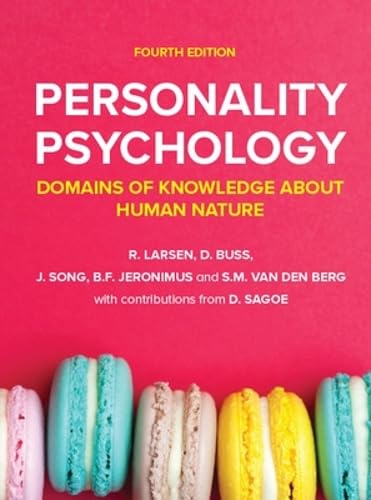 Get the bookBook preview
Randy J. Larsen, David M. Buss, John Song, Bertus Jeronimus, Stephanie van den Berg and Dominic Sagoe. McGraw Hill, January 2025.
A university textbook covering personality assessment, biological influences, cognition and social and cultural context.
Publisher and table of contents
Original French source
François Lelord and Christophe André’s work is retained because the restaurant example and the discussion of “difficult personalities” above draw directly on it. The linked edition is in French; no English translation is implied.
 Get the bookBook preview
François Lelord and Christophe André. French-language edition.
Original source retained for the examples discussed in this article.
Original French edition