
What is solastalgia?
Solastalgia, discussed here alongside eco-anxiety, is a form of suffering and distress linked to environmental change, particularly global warming and biodiversity loss. Australian philosopher Glenn Albrecht coined the term by bringing together the ideas of “solace” and “nostalgia”.
Solastalgia is not presented here as a separate diagnosis in the official classifications of mental disorders, the DSM and ICD (French-language overviews). Yet the distress may take familiar forms, including depressive symptoms and/or anxiety. What distinguishes it in this discussion is its connection with awareness of the planet’s condition and the fear that the destruction of much of its biodiversity may become irreversible. These concerns are associated with what some describe as a sixth mass extinction (article in French). The prospect of major losses over the coming decades and centuries can itself be a powerful source of distress.
How might solastalgia differ from other psychological difficulties?
In this account, solastalgia differs less through its symptoms, such as anxiety or depression, than through what gives rise to them. Some therapists argue that its roots may lie less in someone’s personal past than in their capacity to empathise with the destruction of the world in which we live. They therefore question whether its meaning should be sought primarily in individual biography. Still, solastalgia is not the only situation in which treatment need not begin by tracing everything back to childhood. Work with some phobias, generalised anxiety, obsessive-compulsive difficulties and depression may focus on present experience. At the same time, it is difficult, and sometimes questionable, to separate psychological distress entirely from a person’s history, life path and personality.

Understanding climate distress
Caroline Hickman, University of Bath: “Psychological barriers to climate change”, TEDxBathUniversity (2016). A foundational English-language talk on emotional responses and barriers to action.
Recent practical reading
 Get the bookBook preview
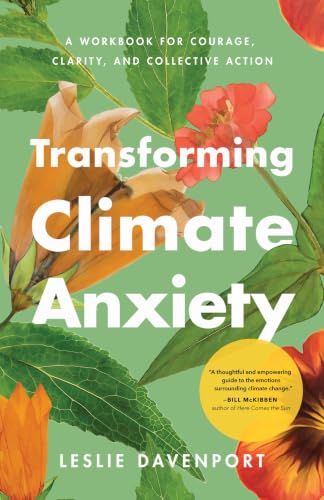
Leslie Davenport. American Psychological Association, August 2026.
Exercises on climate-related emotions, resilience and meaningful individual and collective action.
Publisher and contents
 Get the bookBook preview
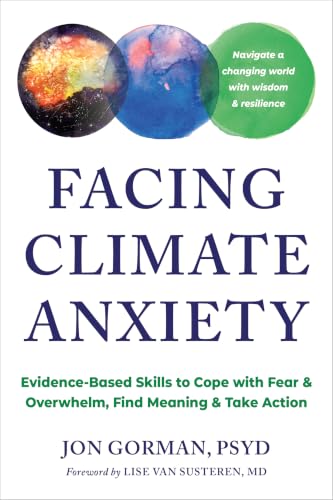
Jon Gorman. Foreword by Lise Van Susteren. New Harbinger, November 2025.
Acceptance and commitment therapy-informed skills for coping with environmental distress while remaining engaged.
Publisher and contents
English editions of the background books
 Get the bookBook preview
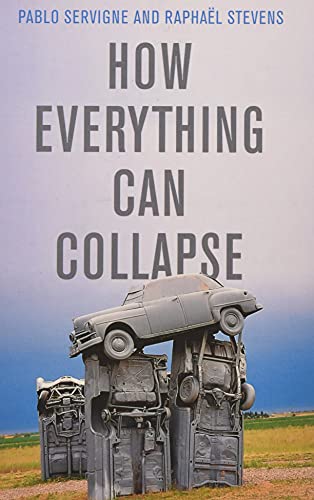
Pablo Servigne and Raphaël Stevens. Translated by Andrew Brown. Polity, 2020.
The published English translation of the French book discussed in the original article; a perspective on societal collapse, distinct from a clinical treatment manual.
Published English edition
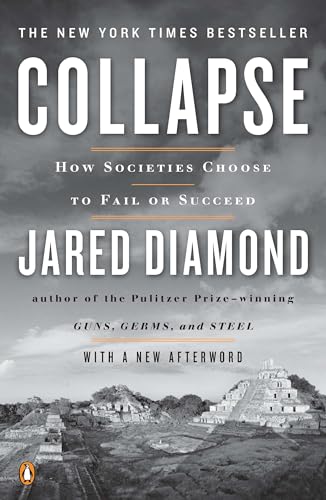 Get the bookBook preview
Jared Diamond. Penguin Books, English-language edition.
Historical and environmental background reading on the vulnerability and resilience of societies.
Publisher and English edition
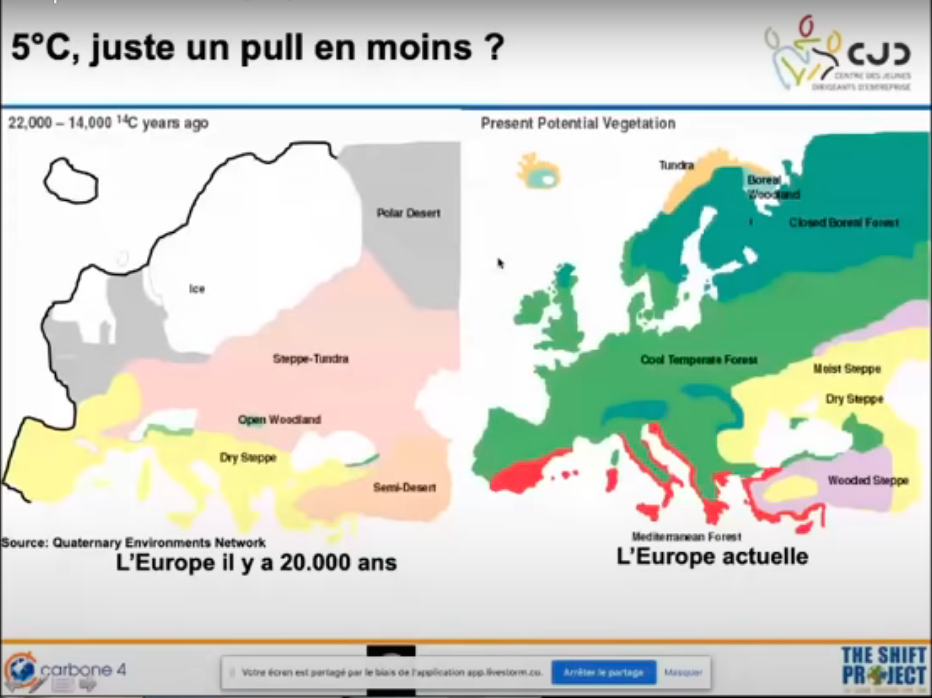
Original illustration discussed in this article in French
Jean-Marc Jancovici’s presentation is retained as the original French-language example of environmental commentary that prompted the author’s reflections. It provides context for the slide below; it is not a clinical explanation of eco-anxiety.